



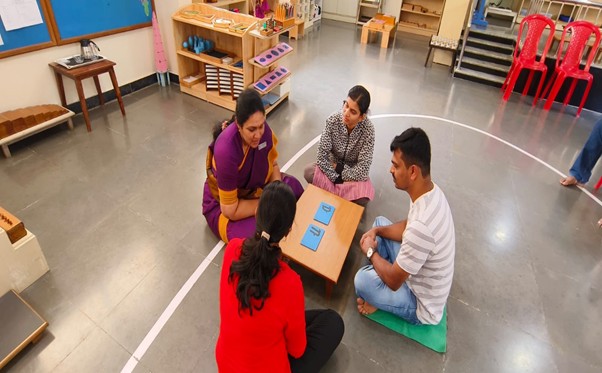
There's a truth every teacher knows and every parent eventually discovers: children don't learn in isolation. They carry their home into the classroom and their classroom back home. When these two worlds work together — genuinely together, not just politely coexisting — something shifts. Grades improve, yes. But more than that, children feel held. They sense that the adults in their life are on the same team.
A strong home-school partnership means exactly that: parents, teachers, and the school community working toward shared educational goals. Not parents receiving updates. Not teachers sending reports. A real collaboration where both sides bring something essential to the table — teachers bring expertise in how children learn, parents bring irreplaceable knowledge of who their child actually is.
In India, where community has always been woven into the fabric of education, this matters even more. The village that raises a child isn't a metaphor here. It's how things work. And when schools and families remember that, children thrive.
What is a Home-School Partnership?
Let's be clear about what this isn't. It isn't attending the annual day function. It isn't signing the diary every night. Those are fine, but they're not partnership.
A home-school partnership is a collaborative relationship built on shared responsibility, two-way communication, and mutual respect. Research from the Education Hub notes that when students take the lead in this partnership, outcomes improve — fewer behavioural issues, increased confidence, better academic results.
The key word is reciprocal. Teachers share what's happening in the classroom. Parents share what's happening at home. Both listen. Both adjust. Both recognise that the other knows something they don't.
Teachers are experts in pedagogy — how children learn, what developmental stages look like, which strategies work. Parents are experts in their child — what makes them anxious, what lights them up, what happened last night that might explain today's mood. Neither expertise is complete without the other.
Why Home-School Partnerships Matter
The case for partnership isn't sentimental. It's practical. And the research is clear.
Impact on Student Achievement
Students whose parents and teachers collaborate consistently outperform those who don't have that support. We're talking about improved grades, better test scores, higher attendance, and lower dropout rates. A 2008 study cited over 138 times found that "involvement in the form of at-home good parenting has a significant impact on student achievement."
But it goes deeper than grades. Children with strong home-school connections show better motivation, stronger self-perception of competence, and more positive attitudes toward learning itself. They believe they can do it. That belief carries them further than any tutoring session.
Benefits for Parents and Families
Partnership empowers parents. When you understand what your child is learning — not just the subjects, but the methods, the expectations, the language the teacher uses — you can actually help. You're not guessing. You're not feeling left out of your own child's education.
Parents in strong partnerships report higher satisfaction with school, reduced stress when challenges arise, and a sense of being equipped rather than isolated. You know your child's strengths. You know where they're struggling. You know what to do about it.
Benefits for Teachers and Schools
Teachers gain something irreplaceable: context. When a parent shares that their child didn't sleep well, or that there's been a change at home, or that their child learns better with visual cues — that information transforms teaching. It prevents misinterpretation. It makes instruction personal.
Classroom management becomes easier when parents reinforce the same expectations at home. Job satisfaction increases. The school culture shifts from "us and them" to "we."
Creating a Supportive Learning Ecosystem
When home and school align, children see a united front. They understand that education is valued — not just at school, not just at home, but everywhere they go. The language around learning stays consistent. The expectations stay consistent. The message stays consistent: we believe in you.
This bridges the gap between the two most vital support systems in a child's life. And that bridge? It holds.
Key Elements of a Strong Home-School Partnership
What makes a partnership actually work? Four things.
Two-Way Communication
Communication has to flow both directions. Not just school to home — home to school too. Parents share information about their child's needs, home circumstances, learning preferences. Teachers share progress, challenges, strategies. Both parties participate actively.
This is open dialogue, not one-sided announcements. When a teacher sends a newsletter, that's information. When a parent responds with a question or observation, that's communication. The difference matters.
Shared Goals and Mutual Respect
Effective partnerships align on educational objectives tailored to the child's unique needs. This requires recognising that teachers are pedagogy experts while parents are child experts. Neither is competing with the other. Both forms of expertise are complementary.
Working toward common endpoints means sitting down — literally or figuratively — and agreeing on what success looks like for this particular child. Not every child. This one.
Trust and Transparency
Trust takes time. It's built through consistent positive interactions, through honesty even when the news isn't good, through following through on commitments. A culture of transparency means both parties openly discuss strategies, concerns, and progress without defensiveness.
When trust exists, difficult conversations become possible. And difficult conversations are where real progress happens.
Consistent Engagement Throughout the Year
Partnership isn't a back-to-school night event. It's not a report card conference twice a year. It requires ongoing effort — regular touchpoints, sustained connection, continuous collaboration.
Relationships are built over time through multiple interactions. The parent who only hears from the teacher when something goes wrong will never feel like a partner. The teacher who only hears from the parent during complaints will feel the same.
Effective Communication Strategies for Home-School Partnership
Good intentions aren't enough. You need practical methods.
Establish Early Contact
Teachers: initiate communication at the start of the school year, before any issues arise. Send an introductory email. Make a welcome call. Share your excitement for the year ahead. This builds goodwill and establishes an open-door policy.
Parents: introduce yourself early. Let the teacher know you're supportive and want to be involved. Don't wait for a problem to make first contact.
Regular and Proactive Communication
Communicate frequently, not just reactively when problems occur. Use a positive-first approach — celebrate small wins, share good news. Weekly newsletters, quick email updates, regular progress reports keep parents informed rather than blindsided.
When the first message a parent receives is positive, they're far more receptive when you eventually need to discuss a challenge.
Use Multiple Communication Channels
Families have different preferences and different access. Some check email constantly. Some prefer phone calls. Some need text messages. Use emails, phone calls, apps, newsletters, parent portals — whatever reaches the family.
Offer virtual or telephone conferences for working parents. Provide translations for multilingual families. Meet families where they are, not where you wish they were.
Clear, Jargon-Free Language
Educational jargon creates distance. "Formative assessment" means nothing to most parents. "We're checking how your child is progressing throughout the unit" means everything.
Use simple language. Make information precise and meaningful. Review the readability of all family-facing communications. If a parent needs a dictionary to understand your message, the message has failed.
Parent-Teacher Conferences Done Right
Face-to-face meetings remain cornerstone opportunities. But structure them for two-way dialogue, not just teacher reporting. Provide specific examples of strengths and areas for improvement. Offer actionable strategies parents can use at home.
Include students in conferences when appropriate — especially older children. And here's the hardest part for many teachers: listen more than you talk.
Practical Ways to Build Strong Partnerships
Theory is useful. Action is better.
For Teachers: Creating Welcoming Environment
Make your classroom a place where parents feel valued, not tolerated. Invite them to observe. Ask them to volunteer. Let them share their expertise — a parent who's an engineer can make a maths lesson unforgettable.
Host family engagement nights: math night, literacy night, STEM showcases. Create inclusive spaces where diverse perspectives are respected. When parents walk in, they should feel like they belong.
For Teachers: Share Learning Strategies
Provide families with curriculum summaries and key skills students will learn. Help parents understand grade-level expectations. Create parent roadmaps showing core skills and how to help outside school.
When parents know what's being taught and how, they can have meaningful conversations about learning at home. "What did you learn today?" becomes "How did you use the number line today?"
For Parents: Active Involvement in School Life
Attend school events. Show up to PTA meetings. Volunteer in the classroom or on field trips. Participate meaningfully in your child's education through whatever opportunities exist.
Your presence sends a message to your child: school matters. That message is more powerful than any lecture about the importance of education.
For Parents: Support Learning at Home
Reinforce classroom lessons. Practice skills. Maintain homework routines. Talk daily about what happens at school — and use the language the teacher uses.
Create a home environment that values learning. Set goals with your children that align with school expectations. The consistency between home and school amplifies everything.
For Both: Collaborative Problem-Solving
When challenges arise — and they will — address them promptly using a problem-solving approach. Listen to concerns. Work together to find solutions. Focus on the child's well-being and continuity in learning.
Develop shared strategies to help students overcome obstacles, manage stress, and build resilience. The goal isn't to assign blame. The goal is to help the child.
Understanding Roles and Responsibilities
Clarity prevents conflict.
The Teacher's Role
Teachers initiate and maintain communication channels. They provide regular updates on curriculum, student progress, and behaviour. They create a welcoming classroom culture that recognises family diversity and individual circumstances.
Good teachers tailor instruction based on insights from parents. Great teachers make partnership a priority, not an afterthought.
The Parent's Role
Parents stay informed about school routines, calendars, and policies. They communicate relevant information about their child's needs and any changes in family life that might affect school. They attend conferences and school events.
They support homework and learning at home. They notify teachers of concerns promptly. And they view the relationship as collaboration, not supervision.
The School Leadership's Role
School leaders take a whole-school strategic approach to family engagement. They provide training and support for staff on engaging families effectively. They set the expectation that every team member prioritises parent partnership.
They involve parents in decision-making on issues that affect them. They allocate resources to family engagement — because what gets resourced gets done.
Overcoming Common Barriers to Partnership
Barriers exist. Acknowledging them is the first step to overcoming them.
Time Constraints and Busy Schedules
Both parents and teachers face time pressures. The solution isn't to demand more time — it's to use time better. Offer flexible meeting times and virtual options. Make communication efficient, not burdensome.
Short, frequent touchpoints often work better than lengthy occasional meetings. Respect that families differ in availability. A working parent who can't attend a 10 AM meeting isn't an uninvolved parent.
Language and Cultural Differences
Ensure materials are translated for multilingual families. Use interpretation services for conferences. Recognise and celebrate diverse cultural backgrounds and experiences.
Make efforts to understand cultural values around education — they vary significantly. Build comfort through culturally responsive practices. What feels welcoming to one family may feel intrusive to another.
Parents' Negative Past School Experiences
Some parents hesitate because their own school experiences were difficult. They remember feeling judged, dismissed, or unwelcome. Those memories don't disappear just because their child is now the student.
Create new positive experiences. Build trust through consistent positive interactions. Make sure parents feel respected, heard, and valued. Make school feel accessible and welcoming — especially for those who never felt that way before.
Digital Divide and Access Issues
Not all families have reliable internet or technology. Offer non-digital communication options. Provide paper newsletters and phone calls. Help families access school portals with simple guides.
Equity in information access isn't optional. If some families can't receive your communications, you haven't communicated — you've excluded.
Involving Families in Decision-Making
True partnership goes beyond information-sharing to shared power.
Parent Advisory Councils and Committees
Create formal structures for parent voice in school decisions. Parent-Teacher Associations, school boards, advisory groups — these give families genuine influence on policies, events, and priorities.
Provide leadership training for parent representatives. Don't just invite parents to the table. Make sure they know how to use their seat.
Gathering Family Input and Feedback
Survey families on preferences for events, communication methods, and school improvements. Place suggestion boxes at key locations. Invite families' concerns, hopes, dreams, and ideas — and act on them.
Show that family input shapes school practices. If you ask for feedback and nothing changes, you've taught families that their voice doesn't matter.
Co-Creating Solutions Together
When challenges arise, develop solutions collaboratively with affected families. Parents should be co-designers, not passive recipients. Honour family knowledge and expertise. Share responsibility for school improvement.
The best solutions often come from the people closest to the problem.
Special Considerations for Diverse Families
One size fits nobody.
Supporting Working Parents
Offer flexible conference scheduling including evenings and weekends. Provide virtual participation options. Keep communication efficient and respectful of time.
Acknowledge employment realities. A parent working two jobs cares just as much as a parent who can volunteer every week. Their constraints are different. Their commitment isn't.
Engaging Fathers and Male Caregivers
Create a father-friendly school culture and events. Recognise that engagement looks different across genders. Explicitly invite and welcome all family members.
Avoid assumptions about primary caregivers. The person who drops off isn't always the person who helps with homework. Communicate with everyone who matters in the child's life.
Partnering with Grandparents and Extended Family
Recognise diverse family structures. Grandparents, siblings, relatives, foster parents — many people raise children. Use inclusive "family" language, not just "parent."
Honour whoever is the child's primary caregiver. Make sure all feel welcome, regardless of their relationship to the child.
Supporting Families of Students with Special Needs
Intensive collaboration is especially crucial for students with disabilities. Share teaching strategies families can implement at home. Communicate frequently about progress and adaptations.
Partnership reduces family stress and improves satisfaction with services. For these families, the stakes are higher — and so is the value of genuine collaboration.
Measuring Partnership Success
What gets measured gets improved.
Family Engagement Metrics
Track attendance at conferences, events, and volunteer hours. Monitor communication frequency and response rates. Survey satisfaction levels from both families and teachers.
Use data to identify gaps and adjust strategies. If certain families aren't engaging, ask why — don't assume they don't care.
Student Outcome Indicators
Look for improved attendance rates, academic achievement, behaviour, and engagement. Track the correlation between partnership strength and student success metrics. Ask students directly whether they feel supported.
The ultimate measure of partnership success is student success.
Continuous Improvement Process
Regularly solicit feedback from families on what's working. Assess the effectiveness of current communication practices. Make iterative improvements based on input.
Celebrate successes while identifying growth areas. Partnership is never finished — it's always evolving.
The Role of Community Volunteers in Strengthening Partnerships
The partnership doesn't stop at parents and teachers.
Leveraging Community Resources
Community members can serve as bridge-builders between schools and families. Volunteers from diverse backgrounds can connect with families who may feel disconnected. Expertise from the community enriches school programmes.
A retired engineer teaching a robotics workshop. A local artist running an after-school programme. A college student tutoring younger children. Community resources multiply what schools can offer.
Vidyanjali Platform for School-Community Engagement
Platforms like Vidyanjali facilitate volunteer involvement in schools across India. Community members contribute time, skills, and resources. This strengthens the school-family-community triangular partnership.
The ecosystem of support extends beyond just parents and teachers. When the whole community invests in education, children feel that investment.
Building Sustainable Partnership Culture
Lasting change requires more than programmes.
From Programs to Partnerships
Shift the mindset from one-off events to sustained relationships. Partnership is an ongoing process requiring continuous planning, development, and evaluation. It should be embedded in school culture, not treated as an add-on.
When partnership becomes the foundation for all interactions, everything else follows.
Equity and Inclusion in Partnerships
Make sure all families feel welcome regardless of socioeconomic status, education level, language, or culture. Avoid one-size-fits-all approaches. Individually tailor opportunities recognising different family needs, preferences, and resources.
Address systemic barriers preventing full participation. Equity isn't about treating everyone the same. It's about giving everyone what they need to participate fully.
Professional Development for Partnership Skills
Teachers need training in family engagement, communication, and cultural responsiveness. This should be ongoing professional learning, not just an initial workshop.
Share best practices across staff. Make partnership competency part of the educator skillset — as essential as lesson planning or classroom management.
Long-Term Vision for Educational Success
Strong partnerships are the foundation for student success now and into the future. Students whose families and schools collaborate maintain advantages through high school and beyond. The investment pays dividends across children's entire educational journey.
This is a shared commitment to nurturing well-rounded, resilient individuals. Not just students who pass exams. People who can navigate life.
Frequently Asked Questions About Building Home-School Partnerships
How can parents start building a partnership if they feel intimidated by school?
Start small. Send a brief email introducing yourself and expressing your interest in supporting your child's learning. Attend one event. Ask one question. Schools genuinely want partnership — they're not adversaries. Most teachers will meet you more than halfway if you take the first step.
What should I do if communication breaks down with my child's teacher?
Address it directly but respectfully. Request a meeting to discuss communication preferences. If that doesn't resolve the issue, involve the school administration — not as an escalation, but as a resource. Keep the focus on your child's needs, not on assigning blame.
How much involvement is too much? What are healthy boundaries?
Engagement should support your child's learning, not control it. Respect teachers' professional expertise. Be present without being intrusive. Quality matters more than quantity — a parent who volunteers once a month but is fully present is more valuable than one who's there daily but micromanaging.
What if I don't speak the language used at school?
Request translation services — schools are often required to provide them. Bring a trusted friend or family member to translate at meetings. Use translation apps for written communication. Your right to participate in your child's education doesn't depend on your language proficiency.
How can single parents or working parents stay engaged when time is limited?
Focus on high-impact activities: attending parent-teacher conferences, maintaining homework routines, having daily conversations about school. Communicate your constraints to teachers — they can adjust expectations and find ways to keep you informed that fit your schedule.
How do teachers balance individual parent relationships with large class sizes?
Systems help. Group communication (newsletters, class apps) handles routine updates. Individual communication is reserved for specific concerns or celebrations. Setting clear expectations about response times prevents burnout. The goal is meaningful connection, not constant availability.
What can schools do when parents seem unresponsive or uninvolved?
Understand the barriers first. Is it time? Language? Past negative experiences? Technology access? Persistence and creative outreach matter. Try different communication channels. Send positive messages, not just problem reports. Remember: lack of engagement rarely means lack of caring.
How can we involve the broader community in supporting school-family partnerships?
Invite community volunteers through platforms like Vidyanjali. Partner with local organisations for resources and expertise. Create events that bring families and community together. Build an ecosystem of support that extends beyond the school walls — because education is everyone's responsibility.