

A student may be drawn to a large donation drive because it looks visible and organised. Another may prefer tutoring one younger child every week. Someone interested in the environment may want to join a clean-up, then realise that collecting waste for one morning does not address why it keeps returning. None of those reactions is wrong. They are the beginning of a more important question: what kind of service matches a real community need, the student’s abilities and the time they can honestly give?
That question fits Vidyanjali Academy’s stated educational purpose. Director Dr Rekha Reddy describes the school’s aim as developing responsible citizens through collaboration among teachers, learners and parents—not only delivering academic knowledge. The practical test of that belief is whether students receive safe, meaningful ways to contribute.
There are many possible routes: school-organised drives, peer mentoring, environmental projects, educational support, work with local organisations, creative volunteering and independent service. The longest list is not necessarily the most helpful one. Students need to understand what each opportunity asks of them and whether the proposed work is actually wanted.
Community service should leave more behind than photographs or a certificate. Ideally, it should help someone, teach the student something honest about responsibility and create a reason to continue caring after the event ends.
What Counts as Community Service for Students?
Community service is generally unpaid, practical work intended to benefit a school, neighbourhood or wider community. For students, it should also be age-appropriate, safe and properly supervised.
The word “service” matters more than the size of the activity. A student does not need to launch an organisation or raise a large amount of money. Reading regularly with a younger learner, sorting donated books correctly or helping an older neighbour use a digital service may be modest actions, but they respond to an identifiable need.
Not every helpful act is a formal service programme. Kindness toward a classmate still matters even if no hours are recorded. Formal community service usually adds some structure: a defined purpose, an organiser or beneficiary, agreed responsibilities and a way to confirm that the work was completed safely.
Intent alone is not enough. Donating items that an organisation cannot use creates storage and disposal work. Arriving at a shelter without permission can disrupt staff. Publishing photographs of beneficiaries may compromise their dignity. Meaningful service begins by asking what would help rather than assuming that any visible action must be useful.
Types of Community Service Opportunities for Students
The following opportunities vary by age, location and organisation. They are routes students can explore—not promises that every option will be available nearby or suitable for every child.
School-Organized Service Projects and Community Drives
School-led projects are often the simplest starting point because the school can coordinate permissions, supervision, transport and communication with partner organisations.
Activities may include food, book or clothing collections; cleanliness campaigns; fundraising for a verified need; awareness events; or support for a local initiative. Students can participate in more than collection. They may help identify what is needed, communicate acceptable donation criteria, sort items, record quantities and reflect on whether the project achieved its purpose.
The weak version of a drive begins with “Let us collect something.” The stronger version begins with a conversation with the receiving organisation. Does it need children’s books or reference books? New clothes or clean used clothes? Particular food items with a safe shelf life? Specificity protects the partner from receiving unusable material and teaches students that service is designed around the recipient, not the donor.
Student-Led Service Clubs and Initiatives
A service club gives students time to move beyond a single event. Members can investigate needs, plan projects, divide responsibilities and review what happened.
Student-led does not mean adult-free. A teacher or approved mentor still has responsibility for safeguarding, permissions and realistic boundaries. Within those boundaries, students can make genuine decisions: which verified need to address, how to communicate with peers, what resources are required and how progress will be checked.
The leadership experience is rarely neat. An idea may attract less participation than expected. A planned partner may not have the capacity to work with minors. Students may disagree about priorities. Learning to adjust without pretending the first plan was perfect is part of the service.
Tutoring, Mentoring and Education Support
Students who understand a subject, language, digital tool or creative skill may be able to support another learner. Options can include reading practice, homework support, peer mentoring, library programmes or assistance through an education-focused organisation.
Knowing an answer is not the same as teaching it. A student tutor has to listen, explain without embarrassment and recognise when a problem needs an adult educator. Mentoring also requires consistency. A younger learner should not be encouraged to rely on someone who will disappear after two meetings.
Peer support works best when the role is clear. A mentor can encourage, practise and guide. They should not be made responsible for counselling, discipline or specialist learning needs beyond their training.
Environmental Clean-Ups and Conservation Projects
Clean-ups, tree planting, school gardening, waste-reduction projects and supervised conservation activities allow students to work on visible environmental concerns.
The most obvious task is not always the most valuable one. Planting many saplings makes an attractive event; planning who will water and protect them determines whether they survive. Collecting litter improves a space temporarily; studying waste sources and bin access may reveal what must change next.
Students should receive safety instructions and suitable equipment. They should not handle hazardous waste, work near unsafe roads or enter unfamiliar areas without authorised supervision. Environmental enthusiasm does not cancel basic risk assessment.
Food, Clothing and Essential-Supply Support
Food banks, relief groups, shelters and community organisations may need help collecting, checking, sorting, packing or distributing essential supplies. The role available to a student will depend on age and the organisation’s rules.
Useful support is precise. Before collecting, students should learn what is accepted, in what condition and by what date. Food must meet safety and expiry requirements. Clothing should be clean and appropriate to the stated need. Books and school supplies should be usable, not a convenient way to dispose of damaged items.
There is a lesson here that extends beyond donation drives: generosity is not measured by what the giver wants to remove. It is measured partly by whether the contribution respects what another person can actually use.
Volunteering With NGOs, Shelters and Community Organizations
Local non-profits, community centres, hospitals, shelters and social organisations may offer structured volunteering. Depending on the setting, students might support an event, prepare materials, organise resources, assist with communications or participate in a supervised outreach programme.
Students should not arrive without contacting the organisation. Many groups have age limits, background requirements, confidentiality rules or limited staff capacity for supervising young volunteers. A respectful first message should ask whether student roles exist, what preparation is required and whether a parent or school must provide consent.
An organisation doing admirable work is not automatically equipped to host minors. That distinction prevents disappointment and protects everyone involved.
Animal Welfare and Shelter Volunteering
Animal welfare appeals to many students, but direct work in a shelter can involve frightened animals, cleaning chemicals, heavy equipment and health risks. Some shelters therefore limit hands-on roles by age.
Where direct care is unavailable, students may be able to prepare approved enrichment items, support an adoption or awareness event, organise a needs-based supply collection, help with supervised administrative work or create accurate educational material about responsible animal care.
The shelter should define the role. Students should not feed, medicate, handle or photograph animals without permission. Caring about animals includes respecting the professional judgement of the people responsible for them.
Supporting Older Adults and People Who Need Assistance
Supervised programmes may connect students with older adults or people who need practical assistance. Opportunities can include reading, conversation, cultural activities, help with basic digital tasks or support during an organised community event.
Companionship should not be treated as a student arriving to “cheer up” a passive recipient. The other person has preferences, privacy and experience of their own. Good programmes create respectful interaction rather than turning someone into a lesson.
Students also need clear limits. They should not provide personal care, medical guidance, financial assistance or unsupervised transport. If a request falls outside the approved role, the responsible adult or organisation must handle it.
Community Awareness and Outreach Activities
Students can support campaigns related to health, safety, the environment, inclusion, literacy or another verified local concern. They may research information, design materials, prepare presentations or help an approved organisation reach families.
Accuracy is essential. A colourful poster can still cause harm if the advice is outdated, exaggerated or taken from an unreliable social-media post. Health, legal and safety information should come from competent authorities and be reviewed by the responsible school or organisation before publication.
Awareness is also not an outcome by itself. Students should know what action the audience can take and where people can obtain trustworthy help.
Skills-Based and Creative Volunteering
Service becomes more sustainable when students can contribute something they genuinely enjoy doing.
A student interested in art might help an organisation prepare educational visuals. Someone who enjoys music may participate in an approved community performance or activity. A confident communicator can assist with an awareness presentation. A technically capable older student might help create a simple, accessible resource under adult supervision.
The community need still comes first. Designing a complicated website for a group that needs a printable form is not good service simply because the student prefers web design. Skills are useful when they solve the partner’s problem at a level the student can safely and reliably deliver.
Service-Learning Projects Connected to School Subjects
Service-learning deliberately connects an academic goal with a genuine community need. It is not ordinary volunteering with a worksheet added afterwards.
A science unit on waste might lead students to study disposal practices and design a school reduction project. Language learning may support the creation of clear community information. Mathematics could be used to record, analyse and explain project data. The service provides context; classroom learning helps students contribute more thoughtfully.
Reflection completes the connection. What did the students assume? What evidence did they collect? Did the action help? Which part of the subject became clearer in practice? These questions stop the project from becoming either empty activity or disguised homework.
Independent Volunteering in the Local Community
Older students may find opportunities outside school through a library, resident group, non-profit, cultural organisation, shelter or other local programme. Independent choice gives them more control over the cause and schedule.
It also places more responsibility on the student and family to verify the organisation. They should confirm identity, location, supervision, age eligibility, safeguarding rules, time expectations and the exact work involved. An online form or social-media account is not enough evidence that an opportunity is safe.
Independent volunteering should never require a student to meet an unknown adult alone, travel to an undisclosed location or share sensitive personal information without a parent or guardian’s knowledge.
How Can Students Find Community Service Opportunities?
Students do not need to search the entire internet. The safest route usually begins with people and organisations already connected to the school or family.
Start With School Clubs, Teachers and Service Programs
Ask whether the school has a service club, peer-mentoring programme, environmental project, community drive or relationship with a local organisation. Teachers may know which opportunities are current and appropriate for the student’s age.
Be specific. “I want to volunteer” is a good beginning, but “I enjoy science and can commit two Saturdays a month” gives the teacher something practical to work with.
School-led opportunities also provide structure for a first experience. A student can learn how permission, communication, teamwork and reflection work before considering a more independent role.
Look for Local NGOs, Libraries, Shelters and Community Groups
Students and parents can check official websites, visit established local institutions or contact organisations directly. Libraries, verified NGOs, community centres, environmental groups, animal-welfare organisations and supervised support programmes may have suitable roles.
The first available opportunity is not automatically the right one. Ask whether minors are accepted, who supervises them, what work they perform, whether training is provided and how personal data is handled.
If the organisation cannot answer basic safety and role questions clearly, that uncertainty is a reason to stop—not a challenge for the student to overlook.
Match Opportunities With Your Interests and Skills
Interest helps a student return after the novelty wears off. A patient reader may enjoy literacy support. A student who likes practical outdoor work may prefer a conservation project. Someone drawn to design or communication may contribute to an approved awareness initiative.
Interest is not the only criterion. The role must still meet a genuine need. The student also needs enough skill to help without creating extra work for the organisation, or a programme willing to train beginners.
A good match sits at the intersection of three things: what the community needs, what the student can contribute or learn, and what they can sustain.
How Should Students Choose the Right Community Service Opportunity?
Choosing well is part of the service. A thoughtful “no” to an unsuitable role is more responsible than an enthusiastic “yes” that creates risk or ends immediately.
Check Age, Safety and Supervision Requirements
Students should confirm the minimum age, adult supervision, location, schedule, physical demands, consent requirements and safeguarding arrangements. Parents or guardians should be included when the student is a minor.
The work itself matters. A role involving vulnerable people, animals, health information, money, vehicles, tools or hazardous materials may require training or may not be suitable for students at all.
No certificate or service-hour target justifies ignoring a rule designed to protect the student or the people being served.
Choose an Opportunity That Addresses a Genuine Community Need
Start by listening to the school, neighbourhood or partner organisation. What problem has it identified? What support has it requested? Why is student participation appropriate?
This prevents a familiar mistake: designing an impressive activity first and looking for someone to receive it afterwards. Community members should not be used as an audience for a student project they never asked for.
A smaller response to a verified need is usually more valuable than a larger activity built on assumption.
Choose a Commitment You Can Sustain
Some needs suit a one-day response. Others depend on continuity. A clean-up event has a defined end; tutoring or mentoring becomes more valuable when the student appears consistently.
Students should consider schoolwork, examinations, travel, family commitments and rest before agreeing. It is better to promise one reliable hour than three hours that repeatedly get cancelled.
Sustainability also means communicating. If circumstances change, the student should inform the organiser early rather than silently disappearing.
School-Led Service, Service-Learning or Independent Volunteering?
These three routes overlap, but they are not identical.
School-led service is organised or approved by the school. It usually offers stronger supervision and simpler access, which makes it useful for younger students and first-time volunteers.
Service-learning links the community activity to defined academic learning. Students use subject knowledge in context and reflect on both the learning and the service outcome.
Independent volunteering is chosen outside the school. It provides greater flexibility and may let an older student follow a specific interest, but the student and family carry more responsibility for checking legitimacy, safety and fit.
None is automatically more meaningful. A compulsory school drive can become thoughtful service if students understand the need and contribute seriously. Independent work can remain superficial if it is chosen only to collect hours. The quality depends on purpose, preparation, participation and follow-through.
Community Service Opportunities at Vidyanjali Academy
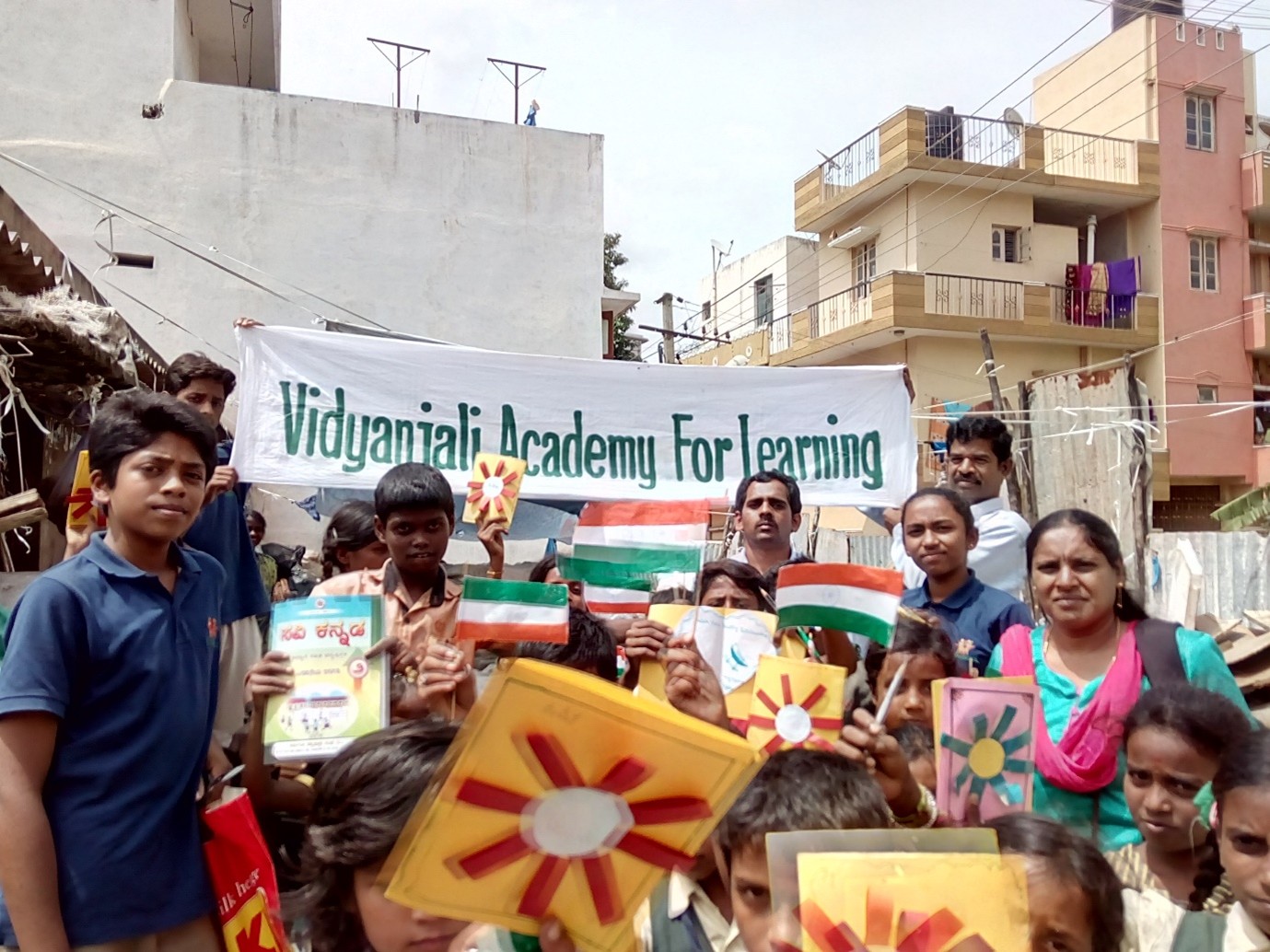
Vidyanjali Academy’s public material documents several forms of student service: charity drives, cleanliness campaigns, awareness activities, peer mentoring and community-oriented projects. These opportunities align with Dr Rekha Reddy’s stated aim of helping students grow into responsible citizens through an education that includes social and emotional development.
The school’s article on civic duty and volunteerism describes students participating in clean-up drives, community activities, awareness work and mentoring. It also presents service as something connected with classroom learning and student leadership rather than an isolated obligation.
Each route develops a different relationship. Cleanliness work connects students with their shared environment. Awareness initiatives ask them to communicate accurate information responsibly. Peer mentoring turns patience and subject understanding into support for another learner. Charity drives require students to think about what a recipient actually needs, not merely what is easy to collect.
The published evidence does not establish that every opportunity is available to every age group throughout the year. Students and parents should therefore confirm current programmes, eligibility, supervision and schedules directly with the school. That is more responsible than turning a broad commitment to service into a promise about a specific activity.
What is consistent is the direction: students are expected not only to learn about responsibility but to encounter structured chances to practise it.
Finding a Community Service Opportunity That Makes a Difference
The right opportunity is not necessarily the largest, most emotional or most visible one.
It is safe for the student. It is wanted by the community or partner organisation. The responsibilities are clear. The commitment fits the student’s available time. The work respects the people, animals or environment involved. And there is some way to understand whether the effort was useful.
Students will not always choose perfectly. A first activity may feel less meaningful than expected. An organisation may have no suitable role for a minor. A student may discover that they prefer regular mentoring to one-day drives—or the other way around. That is not failure. It is part of learning how to contribute responsibly.
The most valuable shift happens when the question changes from “How many service hours can I collect?” to “What can I do reliably that someone genuinely needs?”
That is where community service begins to make a difference—to the community, and to the student doing it.