


Priya's mother noticed something was off. Her daughter, usually chatty about school, had gone quiet. Homework that used to take thirty minutes now stretched past dinner. When the first report card arrived, the grades confirmed what the silence had hinted at — something had shifted, and nobody had caught it in time.
The teacher, it turned out, had noticed changes too. Priya seemed distracted in class, less engaged during group activities. But without a conversation between home and school, both sides were watching the same child struggle from different angles, neither with the full picture.
This happens more often than we'd like to admit. Not because parents don't care. Not because teachers aren't paying attention. But because effective communication between parents and teachers requires intention, structure, and — honestly — more effort than most people realise until something goes wrong.
The good news? When that communication works well, everything changes. Academic performance improves. Behavioural issues get addressed before they escalate. Children feel genuinely supported. And both parents and teachers stop operating in isolation.
This guide is for Indian parents and educators who want to build those partnerships properly — not with generic advice, but with strategies that actually work in our schools, our schedules, and our cultural context.
Why Effective Communication Between Parents and Teachers Matters
The research is clear, and it's not subtle. Students whose parents and teachers communicate regularly perform better academically, show fewer behavioural problems, and report feeling more supported. This isn't correlation — it's causation. When the adults in a child's life are aligned, the child thrives.
But let's be specific about what "thriving" actually looks like.
Impact on Student Academic Performance
When teachers understand what's happening at home — a new sibling, a parent travelling for work, a grandmother's illness — they can interpret classroom behaviour correctly. That child who seems distracted isn't lazy. They're processing something.
And when parents understand what's happening in the classroom — the current unit in mathematics, the reading level their child is working at, the specific skill being developed this month — they can reinforce learning at home. Not by becoming tutors, but by asking the right questions. By noticing the right things.
Consider this: a teacher notices a student struggling with word problems. She mentions it to the parent during a brief conversation. The parent starts pointing out real-world math during grocery shopping — "If we need 6 apples and the bag has 4, how many more?" Within weeks, the struggle eases. Not because of extra worksheets. Because of alignment.
Homework completion improves when parents know what's expected. Test scores rise when home and school are working on the same skills. Grades reflect not just what a child knows, but how well the adults around them are coordinating.
Supporting Social and Emotional Development
Academic performance is only part of the picture. Children are whole people, and their emotional lives don't pause at the school gate.
A child being excluded by friends at lunch might not tell their teacher. But they might cry at home. A child anxious about a classroom presentation might not tell their parents. But their teacher sees them freeze when called upon.
When parents and teachers share these observations — gently, without alarm — patterns emerge. Bullying gets identified early. Anxiety gets addressed before it becomes avoidance. Friendship struggles get supported from both sides.
The united front matters here. When a child knows that home and school are communicating, they feel held. Secure. They can't play one side against the other, and more importantly, they don't need to. The adults have it covered.
Creating Consistency Between Home and School
Children thrive on consistency. Not rigidity — consistency. When the expectations at home and school align, children spend less energy figuring out which rules apply where and more energy actually learning.
This applies to everything: discipline approaches, study routines, screen time boundaries, even language around effort and achievement. If a teacher emphasises growth mindset and a parent only praises results, the child receives mixed messages. If a school expects homework completed independently and parents hover over every problem, the child never develops self-reliance.
Alignment doesn't mean identical approaches. It means compatible ones. And that requires conversation.
Building Trust and Partnership
Here's what nobody tells you: the difficult conversations become possible only after the easy ones have happened.
If the first time a teacher contacts a parent is to report a problem, that conversation starts defensive. But if there's been a relationship built — through positive updates, through casual check-ins, through genuine connection — then the difficult conversation happens between partners, not adversaries.
Trust develops through consistency. Through follow-through. Through showing up when you said you would. It's not built in one meeting. It's built over months of small interactions that signal: we're on the same team here.
Core Elements of Effective Parent-Teacher Communication
Before we talk about specific channels and strategies, let's establish what makes communication actually work — regardless of whether it happens in person, over the phone, or through an app.
Two-Way Communication: The Foundation
Two-way communication means both parties talk and both parties listen. It sounds obvious. It rarely happens.
Most parent-teacher communication is one-way: the school sends information, the parent receives it. Newsletters. Report cards. Event announcements. This is necessary, but it's not sufficient.
True two-way communication means parents share observations from home — "She's been having trouble sleeping this week" — and teachers share observations from school — "He's been more withdrawn during group work lately." Both sides contribute pieces of the puzzle.
Active listening matters here. Not waiting for your turn to speak. Actually hearing what the other person is saying, asking clarifying questions, and responding to what was said rather than what you assumed would be said.
The equal partnership model requires a shift in mindset. Teachers are experts in education. Parents are experts in their child. Neither expertise is complete without the other.
Timeliness and Frequency
How often should parents and teachers communicate? The honest answer: it depends.
For routine updates — classroom activities, upcoming events, general progress — weekly or fortnightly communication works well. For specific concerns — academic struggles, behavioural changes, social issues — communication should happen as soon as the concern emerges. Not at the next scheduled conference. Now.
The balance matters. Too little communication leaves parents feeling uninformed and teachers feeling unsupported. Too much communication overwhelms everyone and dilutes the important messages.
Proactive communication prevents problems. If a teacher notices early signs of struggle, reaching out immediately — before the struggle becomes failure — gives everyone time to respond. Waiting until report card time is too late.
Clarity and Transparency
Educational jargon alienates parents. "Your child is performing below grade-level expectations in reading fluency" tells a parent almost nothing useful. "Your child reads about 40 words per minute, and we'd like to see her at 60 by December — here's how you can help" tells them everything.
Transparency means being honest about challenges without being harsh. It means providing specific examples rather than vague assessments. "He struggles with attention" is vague. "He often looks out the window during math instruction and misses the examples I give" is specific and actionable.
Cultural sensitivity matters in language choice. Some parents come from educational backgrounds where questioning a teacher was unthinkable. Others expect to be consulted on every decision. Effective communicators read their audience and adjust accordingly.
Positivity and Solution-Focused Approach
Every conversation about a child should include something positive. Not as manipulation — as accuracy. Every child has strengths. Leading with those strengths creates a foundation for discussing challenges.
The sandwich approach — positive observation, concern, positive observation — works because it's honest. "Rahul is incredibly creative and his stories are imaginative. I've noticed he's rushing through math problems and making careless errors. I think if we can help him slow down, his natural problem-solving ability will shine through."
Solution-focused means exactly that: focusing on solutions. What can we do? What will we try? How will we know if it's working? Blame has no place in these conversations. Neither does defensiveness.
Establishing Effective Communication Channels
The best communication strategy uses multiple channels, each suited to different purposes. No single method works for everything.
Parent-Teacher Conferences
Face-to-face meetings remain the gold standard for substantive conversations. There's no substitute for sitting across from someone, reading their expressions, and having a real dialogue.
Preparation makes conferences productive. Teachers should have specific examples ready — work samples, observation notes, assessment data. Parents should come with questions written down and observations from home to share.
Quarterly conferences work well for most students. Students with specific challenges may need monthly check-ins. The frequency should match the need.
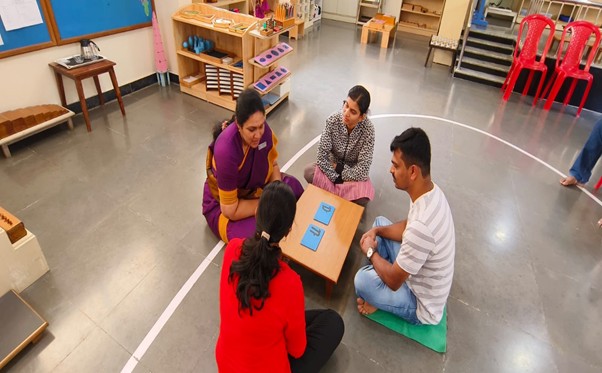
The environment matters. A welcoming space — not behind a desk that creates a barrier, but at a table where both parties sit as equals — signals partnership. Offering water, starting with a warm greeting, thanking parents for coming: these small gestures set the tone.
Follow-up after conferences is often forgotten but essential. A brief message summarising what was discussed and what each party committed to do creates accountability and shows the conversation mattered.
Digital Communication Tools
Modern platforms have transformed parent-teacher communication. School management apps, WhatsApp groups, email — these tools enable instant updates, photo sharing, and document exchange that would have been impossible a generation ago.
The advantages are real: parents can see classroom activities through shared photos, receive homework reminders, track attendance, and get announcements immediately. Teachers can reach all parents simultaneously and maintain records of communication.
But guidelines matter. Response time expectations should be clear — teachers shouldn't be expected to respond to messages at 10 PM. Appropriate content should be defined — some conversations belong in private messages, not group chats. Professional boundaries must be maintained even in informal platforms.
Accessibility is crucial. Not all parents have smartphones or reliable internet. Schools must ensure that digital tools supplement rather than replace other communication methods.
Data privacy deserves attention. Photos of children, academic information, behavioural observations — all of this is sensitive. Platforms should be secure, and sharing should be thoughtful.
Regular Progress Updates
Beyond formal report cards, regular progress updates keep parents informed and engaged. Weekly newsletters describing classroom activities and upcoming events help parents ask informed questions at home.
Individual progress updates — a quick note about a test score, a photo of a completed project, a mention of a kind act — make parents feel connected to their child's daily experience.
Homework calendars and assignment trackers reduce the "I don't have any homework" problem and help parents support completion without nagging.
Celebrating achievements matters. Not just academic awards, but effort, improvement, kindness, leadership. When parents hear about their child's successes, they can reinforce them at home.
Phone Calls and Text Messages
Sometimes a phone call is the right choice. For sensitive matters, for urgent concerns, for conversations that require tone and nuance — voice communication adds a personal dimension that text cannot match.
Phone calls work best when scheduled. A surprise call during work hours creates anxiety. A scheduled call allows both parties to prepare and be present.
Text messages serve well for quick updates and reminders: "Don't forget tomorrow is sports day" or "Ananya did wonderfully in her presentation today." They're not appropriate for complex or sensitive discussions.
Language considerations matter in multilingual contexts. If a parent is more comfortable in Kannada or Hindi than English, communication in their preferred language shows respect and ensures understanding.
Home Visits and Community Engagement
Teachers who understand a student's home environment understand the student better. Home visits — where culturally appropriate and welcomed — provide context that no report can capture.
Community events bring parents to school in low-pressure settings. Open houses, cultural programmes, sports days, annual functions — these create opportunities for informal interaction that builds relationships.
In the Indian context, parents often participate actively in school events. Festival celebrations, community fairs, parent presentations — these touchpoints strengthen the home-school connection beyond formal meetings.
Even brief interactions during pickup and drop-off times matter. A smile, a quick update, a moment of connection — these accumulate into relationship.
Effective Communication Strategies for Teachers
Teachers carry the primary responsibility for initiating and maintaining communication. Here's how to do it well.
Set Clear Communication Expectations Early
The beginning of the school year is the time to establish how communication will work. A clear policy shared with all parents — preferred contact methods, expected response times, availability windows — prevents misunderstandings later.
Welcome letters or orientation sessions should cover: how parents will receive updates, how they can reach the teacher, what response time to expect, and what kinds of concerns warrant immediate contact versus waiting for scheduled meetings.
Boundaries matter. Teachers need personal time. Being accessible doesn't mean being available 24/7. Clear boundaries, communicated respectfully, are healthy for everyone.
Lead with Positivity and Build Relationships
Make your first contact with every parent a positive one. Before any concern arises, reach out with something good: "I wanted you to know that Arjun helped a classmate who was struggling today. You should be proud."
This isn't manipulation. It's relationship-building. When the difficult conversation eventually comes — and it will — it happens between people who already trust each other.
Remember details about families. Ask about the grandmother who was ill. Mention the sibling who just started college. These small acknowledgments signal that you see the child as part of a family, not just as a student in your class.
Be Proactive, Not Just Reactive
If you only contact parents when there's a problem, parents learn to dread your messages. Break that pattern by reaching out regularly with positive updates, interesting observations, and invitations for input.
When you notice early warning signs — a dip in engagement, a change in behaviour, a pattern of incomplete homework — reach out immediately. "I've noticed something and wanted to check in" is very different from "We have a serious problem."
Invite parent input throughout the year. "Is there anything happening at home I should know about?" opens doors that stay closed otherwise.
Use Technology Effectively and Appropriately
School management systems can handle routine communication efficiently — attendance updates, assignment reminders, event announcements. Use them for what they're good at.
Share classroom moments through photos and videos when appropriate. Parents love seeing their children engaged in learning. These glimpses build connection and trust.
But maintain professional boundaries. Your personal phone number doesn't need to be shared with every parent. Your evenings and weekends deserve protection. Technology should make communication easier, not endless.
Ensure accessibility. If some parents don't have smartphones, provide paper alternatives. If some aren't comfortable with apps, offer phone calls. Meet families where they are.
Personalize Communication to Family Needs
Every family is different. Single parents juggling work and childcare have different constraints than families with stay-at-home caregivers. Joint custody situations require communication with multiple households. Extended family members — grandparents, aunts, uncles — may be primary caregivers.
Learn each family's situation and adapt accordingly. Offer flexible meeting times for working parents. Send updates to both parents in separated families. Include grandparents in communication when they're the daily caregivers.
Cultural sensitivity means recognising that families have different communication styles, different comfort levels with authority figures, and different expectations of schools. Adjust your approach without compromising your message.
Effective Communication Strategies for Parents
Communication is a two-way street. Parents have responsibilities too.
Be Responsive and Engaged
When teachers reach out, respond. Even if it's just "Thank you for letting me know" — acknowledgment matters. Teachers who feel ignored stop trying.
Attend scheduled meetings and conferences. If you genuinely cannot attend, communicate that and reschedule. Simply not showing up sends a message you probably don't intend.
Read what comes home. Sign what needs signing. Return forms on time. These small acts of responsiveness signal that you're engaged and that school matters in your household.
Show interest in your child's daily school experience. Ask specific questions: "What did you do in art today?" works better than "How was school?" Listen to the answers.
Share Important Information About Your Child
Teachers need context to teach well. If your child has a learning difficulty, a health condition, or a situation at home affecting their behaviour — share it. Not every detail, but enough for the teacher to understand and respond appropriately.
Share strengths and interests too. "She loves dinosaurs" or "He learns best when he can move around" helps teachers connect with your child as an individual.
When circumstances change — a family move, a divorce, a death, a new sibling — let the teacher know. Children process these changes at school even when they don't talk about them. Teachers who understand can support.
Approach Teachers as Partners, Not Adversaries
This might be the most important shift. Teachers are not the enemy. They're not obstacles to your child's success. They're partners in it.
Assume positive intent. If a teacher's action confuses or concerns you, ask about it before judging. "Can you help me understand why..." opens dialogue. "Why did you..." closes it.
When you have concerns, express them respectfully. "I'm worried about..." works better than "You're not doing enough about..." Focus on the child, not on blame.
Recognise that teachers have expertise you don't have, just as you have knowledge of your child that they don't have. Both perspectives matter. Neither is complete alone.
Ask Questions and Seek Clarification
Don't wait until you're confused or frustrated. Ask questions early and often. What is my child learning this term? How is she doing compared to expectations? What can I do at home to support this?
When you receive feedback, ask for specifics. "He needs to work on his writing" is vague. "What specifically should we focus on? Can you show me an example?" gets you information you can use.
Ask about how to help at home. Teachers have suggestions — often simple ones — that make a real difference. But they won't always volunteer them. You have to ask.
Follow Through on Commitments
If you agree to implement a strategy at home, do it. Consistently. If you commit to attending a meeting, show up. If you say you'll check homework nightly, check homework nightly.
Follow-through builds trust. It shows teachers that their efforts are matched at home. It shows your child that home and school are aligned.
If a strategy isn't working, communicate that. "We tried the reading log for two weeks and it's becoming a battle every night" is useful information. Suffering in silence helps no one.
Common Barriers to Parent-Teacher Communication
Understanding obstacles is the first step to overcoming them.
Time Constraints and Busy Schedules
This is real. Teachers have 30 students and limited hours. Parents have jobs, other children, and lives. Finding time for meaningful communication is genuinely difficult.
Solutions exist. Virtual meetings eliminate travel time. Asynchronous communication — messages that don't require immediate response — allows flexibility. Brief, focused updates take less time than lengthy reports. Designated communication windows help both parties plan.
The key is efficiency without sacrificing substance. A five-minute phone call can accomplish what a thirty-minute meeting would, if both parties are prepared.
Language and Cultural Differences
In India's multilingual context, parents and teachers may not share a common language. Even when they do, cultural differences in communication styles can create misunderstandings.
Some parents come from backgrounds where teachers were authority figures not to be questioned. Others expect to be consulted on every decision. Some cultures value directness; others find it rude.
Solutions include translation services, multilingual communication materials, and cultural competency training for teachers. Community liaisons who share parents' backgrounds can bridge gaps. Most importantly, patience and willingness to understand go a long way.
Technology Access and Digital Divide
Not every family has a smartphone. Not every family has reliable internet. Not every parent is comfortable with apps and platforms.
Schools that rely exclusively on digital communication exclude these families. The solution is simple: provide multiple options. Digital for those who prefer it, paper for those who need it, phone calls for those who want them.
Technology training sessions can help parents who want to use digital tools but don't know how. School-based access points — computers available during pickup time, for instance — can bridge gaps.
Lack of Trust or Past Negative Experiences
Some parents had terrible experiences in their own schooling. Some have been burned by previous teachers or schools. Some have faced judgment or discrimination. These experiences create walls.
Rebuilding trust takes time and consistency. It requires positive interactions that contradict negative expectations. It requires transparency, active listening, and acknowledgment of concerns.
Sometimes a fresh start helps. A new school year, a new teacher, a deliberate effort to begin differently. Sometimes a mediator — a counsellor, an administrator, a trusted community member — can help bridge the gap.
Assumptions and Misconceptions
Teachers sometimes assume that parents who don't respond don't care. Often, they're working two jobs, or don't speak English well, or are intimidated by schools, or simply didn't receive the message.
Parents sometimes assume that teachers who raise concerns are criticising their parenting. Often, they're trying to help, sharing observations, seeking partnership.
Written communication is particularly prone to misinterpretation. Tone doesn't translate well to text. A message intended as informative can read as accusatory.
The solution is simple but hard: assume good intent, seek clarification before judging, and communicate your own intentions clearly.
The Role of Technology in Modern Parent-Teacher Communication
Technology has transformed how schools and families connect. Used well, it enhances communication. Used poorly, it creates new problems.
School Management Systems and Apps
Comprehensive platforms integrate everything: attendance tracking, grade reporting, assignment management, fee payment, event calendars, and direct messaging. Parents get real-time access to their child's school life.
The benefits are significant. No more "I didn't know about the field trip." No more "The teacher never told me about the test." Information flows continuously and is documented.
But platforms require training. Parents need to know how to use them. Teachers need to keep them updated. Schools need to ensure the technology serves communication rather than replacing it.
Instant Messaging and Communication Apps
WhatsApp groups, ClassDojo, Remind, Seesaw — these tools enable quick, informal communication that keeps parents connected to daily classroom life.
Photo and video sharing is particularly powerful. Seeing your child engaged in a science experiment or proudly presenting their project creates connection that words alone cannot.
But boundaries matter. Group chats can become overwhelming. Response time expectations need to be clear. Private matters should stay in private messages. Professional boundaries must be maintained even in casual platforms.
Virtual Meetings and Video Conferencing
Zoom and Google Meet have made parent-teacher conferences accessible to working parents who cannot visit school during work hours. This is a genuine improvement in access.
Virtual meetings require different skills than in-person ones. Eye contact means looking at the camera, not the screen. Technical difficulties need backup plans. Recording options can help parents who cannot attend live.
But virtual meetings are not equivalent to in-person ones. Some conversations — particularly sensitive ones — benefit from physical presence. The goal is to add options, not eliminate face-to-face connection.
Balancing Digital and Personal Communication
Technology should enhance human connection, not replace it. A quick message about a good day is wonderful. A difficult conversation about a struggling child needs more than text.
Non-verbal cues matter. Facial expressions, body language, tone of voice — these carry meaning that text cannot. For sensitive topics, choose communication methods that preserve these cues.
The personal touch still matters. A handwritten note, a phone call just to check in, a warm greeting at pickup — these human moments build relationships that apps cannot.
Measuring Effective Communication: Signs of Success
How do you know if your communication strategies are working?
Parent Engagement Indicators
Look for increased attendance at meetings, events, and conferences. Higher response rates to communications. More parent-initiated contacts — questions, updates, concerns shared proactively.
Active participation in student learning at home is a strong indicator. Parents asking about homework, reinforcing classroom learning, engaging with school content.
Perhaps most importantly: parents feeling comfortable approaching teachers with concerns. When parents reach out early rather than waiting until problems escalate, communication is working.
Student Outcomes and Behavioral Changes
Improved academic performance and grades. Better homework completion and assignment submission. Reduced behavioural issues and disciplinary incidents.
Increased student engagement and participation in class. Students who feel supported by aligned adults are more willing to take risks, ask questions, and engage fully.
Students expressing that they feel supported both at home and school. When children say "my teacher and my parents both want me to succeed," communication has done its job.
Quality of Interactions
Watch for a shift from reactive problem-solving to proactive collaboration. Conversations that focus on solutions rather than blame. Mutual respect evident in how parents and teachers speak about each other.
Shared celebration of student progress — both parties taking pride in the child's achievements. Comfortable, open dialogue even on challenging topics.
When difficult conversations happen without defensiveness, when concerns can be raised without fear, when both parties feel heard — that's success.
Creating a Communication-Friendly School Culture
Individual teachers can do much. But systemic support makes everything easier.
School Leadership's Role in Facilitating Communication
Administrators set the tone. When school leaders model effective communication — with parents, with teachers, with students — it becomes the norm.
Providing teachers with tools, time, and training for parent engagement is essential. Communication takes time. If teachers aren't given that time, it won't happen well.
School-wide policies and expectations create consistency. Parents should know what to expect regardless of which teacher their child has.
Resources matter: translation services, technology platforms, communication materials. Schools that invest in these resources signal that parent engagement is a priority.
Professional Development for Teachers
Communication skills can be taught. Training on effective strategies, cultural competency, and handling difficult conversations equips teachers to engage parents successfully.
Digital communication tools require training too. Teachers need to know how to use platforms effectively and appropriately.
Ongoing support and mentoring help, especially for new teachers. Experienced colleagues can share what works and help navigate challenging situations.
Systemic Approaches to Parent Engagement
Communication should be integrated into the school's mission and values, not treated as an add-on. Multiple touchpoints throughout the academic year — not just one annual conference — keep engagement continuous.
Parent advisory committees and feedback mechanisms give parents voice in school decisions. Celebrating parent-teacher partnerships publicly reinforces their importance.
Continuous improvement based on feedback from both parents and teachers ensures that communication strategies evolve and improve over time.
The Indian Context: Unique Considerations for Vidyanjali Schools
Effective communication strategies must fit the context where they're applied. India's educational landscape has unique features that shape how parent-teacher partnerships work.
Cultural Values and Expectations
Traditional Indian culture holds teachers in high regard — "Guru Brahma, Guru Vishnu." This respect is valuable, but it can also create barriers. Parents may hesitate to question teachers, share concerns, or engage as equal partners.
The balance is delicate: honouring the respect for educators while encouraging the open dialogue that serves children best. Teachers can invite partnership explicitly, making clear that parent input is valued and expected.
Parent involvement patterns vary significantly between urban and rural settings, between different socioeconomic backgrounds, between families with different educational histories. One approach doesn't fit all.
Joint family systems mean that grandparents, aunts, and uncles may be involved in a child's education. Communication strategies should accommodate extended family involvement where it exists.
Regional and linguistic diversity requires adapted communication. A school in Bangalore serves families speaking Kannada, Tamil, Telugu, Hindi, and English — sometimes all in the same classroom. Multilingual communication isn't optional; it's essential.
Festival celebrations and cultural events offer natural engagement opportunities. Diwali, Dussehra, Pongal, Eid — these occasions bring families to school and create connection points beyond academic concerns.
Leveraging Vidyanjali Platform for Enhanced Communication
The Vidyanjali platform, a Government of India initiative, addresses many communication challenges specific to Indian schools. It connects schools with volunteers and resources while facilitating transparent communication between stakeholders.
Features supporting multilingual communication help bridge language gaps. Accessibility across diverse socioeconomic backgrounds ensures that digital tools don't exclude families without advanced technology.
The community volunteering aspect of Vidyanjali creates additional touchpoints between schools and families. When parents volunteer — sharing skills, supporting activities, contributing resources — they become invested partners in the school community.
Integration with existing school practices matters. Technology should enhance what schools already do well, not replace it with something unfamiliar.
Addressing Diverse Educational Settings
Government schools with limited resources face different communication challenges than well-funded private schools. Strategies must be adapted to what's actually possible — leveraging free tools, community resources, and creative solutions.
Private schools often face high parent expectations and demands for constant communication. Managing these expectations while maintaining boundaries requires clear policies and consistent enforcement.
Rural schools may struggle with technology access and literacy challenges. Paper-based communication, community meetings, and home visits may be more effective than digital tools.
Urban schools serve time-constrained working parents who may struggle to attend daytime meetings. Flexible scheduling, virtual options, and efficient communication become essential.
The core principles remain constant across settings: two-way communication, timeliness, clarity, positivity, and partnership. The methods adapt to context.
Frequently Asked Questions
How often should teachers communicate with parents?
There's no single right answer — it depends on the purpose and the student's needs.
For general updates about classroom activities and upcoming events, weekly or fortnightly communication works well. For individual student progress, monthly check-ins are reasonable for students doing well; more frequent contact is needed for students facing challenges.
Concerns should be communicated immediately, not saved for scheduled meetings. A quick message — "I noticed something today and wanted to share it while it's fresh" — is always appropriate.
The key is consistency. Whatever frequency you establish, maintain it. Parents should know what to expect.
What should I do if a teacher doesn't respond to my communication?
First, wait a reasonable time. Teachers are busy, and a day or two delay is normal. If you haven't heard back in a week, follow up politely: "I wanted to make sure my message reached you."
If repeated attempts go unanswered, escalate through proper channels — typically the school office or administration. Frame it as seeking help, not complaining: "I've been trying to reach my child's teacher and haven't been able to connect. Can you help?"
Consider whether your initial communication was clear and appropriate. A specific question gets a response more reliably than a vague concern. A respectful tone invites engagement.
How can I communicate effectively if I don't speak English well?
Many schools offer translation services or have staff who speak regional languages. Ask about this directly — schools want to communicate with you and will find ways to do so.
Bring a family member or friend who can translate if needed. Written communication can be translated using apps if verbal communication is difficult.
Don't let language barriers stop you from engaging. Your involvement matters more than perfect English. Teachers appreciate parents who try, regardless of language proficiency.
What are the best communication methods for working parents?
Virtual meetings eliminate travel time and can be scheduled during lunch breaks or after work hours. Many teachers are willing to accommodate working parents' schedules if asked.
Asynchronous communication — email, app messages, written notes — allows you to engage when you have time rather than at a fixed moment. You can read updates at night and respond in the morning.
Brief, focused communication works better than lengthy exchanges. A five-minute phone call during your commute can accomplish what a thirty-minute meeting would.
Be proactive about your constraints. Tell teachers upfront: "I work until 6 PM and can't attend daytime meetings, but I'm very engaged and want to stay connected. What options do we have?"
How do I raise a concern without seeming confrontational?
Start with curiosity, not accusation. "Can you help me understand..." opens dialogue. "Why did you..." closes it.
Frame concerns as questions seeking information. "I noticed Priya came home upset after school yesterday. Did something happen that I should know about?" is very different from "Why was my daughter upset?"
Acknowledge the teacher's perspective and expertise. "I know you see things I don't see, and I wanted to share what I'm observing at home to get your thoughts."
Focus on the child and on solutions. "I'm worried about..." followed by "What can we do together?" keeps the conversation productive.
What information should parents share with teachers?
Share anything that affects your child's learning or behaviour at school: health conditions, learning differences, family circumstances, significant changes at home, emotional struggles, sleep issues, medication changes.
Share strengths and interests too. "She loves animals" or "He's really into cricket right now" helps teachers connect with your child.
You don't need to share everything. Private family matters that don't affect school can remain private. But when in doubt, share. Teachers can only help with what they know about.
How can teachers handle parents who are overly critical or demanding?
Listen first. Often, critical parents feel unheard. Active listening — really hearing their concerns, acknowledging their feelings — can defuse tension.
Stay professional and calm. Don't match escalation with escalation. A measured response to an angry message often brings the temperature down.
Set boundaries clearly and kindly. "I want to address your concerns, and I can do that best if we schedule a time to talk rather than exchanging messages." "I'm not available after 6 PM, but I'll respond first thing tomorrow."
Involve administration when needed. Some situations require support. Knowing when to escalate is a professional skill, not a failure.
What role does the school administration play in parent-teacher communication?
Administration sets expectations, provides resources, and supports teachers in engaging parents effectively. This includes establishing school-wide communication policies, providing technology platforms, offering training, and allocating time for parent engagement.
Administrators also serve as mediators when communication breaks down. When a parent-teacher relationship becomes strained, administrative involvement can help reset the relationship.
School leaders model effective communication. How the principal communicates with parents sets the tone for the entire school.
How can communication be improved for parents of children with special needs?
Children with special needs require more frequent and more detailed communication. Progress toward IEP goals, effectiveness of accommodations, behavioural observations — all of this needs regular sharing.
Collaboration on interventions is essential. Parents and teachers must work together to implement strategies consistently across home and school.
Documentation matters more. Written records of what's working, what's not, and what's being tried create continuity and accountability.
Patience and partnership matter most. Supporting a child with special needs is challenging for everyone involved. Mutual support between parents and teachers makes it sustainable.