



Students with involved parents show 10-15% higher academic performance across nearly every measure researchers have examined. That's not marketing language — it's what decades of educational research consistently demonstrates.
A 2019 review by the American Psychological Association examined 448 studies on parental involvement and found a positive correlation with student achievement, motivation, and engagement — regardless of family income, education level, or background. Parental involvement transcends socioeconomic status. It remains the single most powerful factor within a family's control when it comes to student achievement.
This isn't about hovering over homework or attending every school event. It's about something deeper: the relationship between a parent's engagement and a child's belief that education matters. That connection — when it's genuine — changes everything.
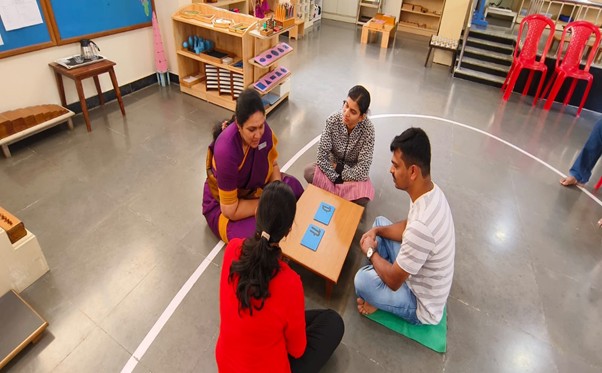
At Vidyanjali Academy for Learning, we've seen this play out for over three decades. Our community-school partnership model, built through programmes like Parent Empowerment Day and Parent Engagement Conference, reflects what research confirms: when parents and schools work together, children thrive.
What is Parental Involvement in Education?
Parental involvement refers to the active participation of parents in their child's learning process — both at home and at school. But here's a distinction worth making: involvement and engagement aren't quite the same thing.
Involvement is about activities — helping with homework, attending parent-teacher meetings, volunteering in the classroom. Engagement is about mindset and relationship — the ongoing commitment to understanding your child's educational journey and being present in ways that matter to them.
Parental involvement takes many forms:
Homework support — not doing it for them, but being available
School attendance — showing up for events, performances, and meetings
Communication with teachers — regular, two-way conversations about progress
Volunteering — contributing time and skills to school activities
Home learning environment — creating space and routines that support study
It's a shared responsibility. Schools must create welcoming environments and clear communication channels. Parents must show up — physically or otherwise. Neither can do this alone.
The Research: Evidence Linking Parental Involvement to Student Success
The evidence base for parental involvement spans more than 50 years of educational research. Multiple meta-analyses and longitudinal studies have examined this relationship from every angle. The findings are remarkably consistent.
Academic Achievement Improvements
The 2019 APA review of 448 studies found that parental involvement is consistently associated with higher achievement, increased motivation, and greater engagement across grade levels.
John Hattie's influential research on educational interventions calculated an effect size of 0.50 for parental involvement — equivalent to more than one year's academic growth. To put that in perspective: very few educational interventions achieve effect sizes that high.
Henderson and Mapp's comprehensive research synthesis found that students with involved parents earn higher grades, score better on standardised tests, and demonstrate improved overall academic performance. The benefits appear across subjects, across grade levels, and across demographic groups.
Enhanced Social-Emotional Development
Academic outcomes tell only part of the story. Research shows that children with involved parents demonstrate improved behaviour, better social skills, higher self-esteem, and fewer disciplinary issues.
Studies indicate that students with engaged parents show approximately 40% higher confidence when tackling academic challenges. They're more likely to persist through difficulty, ask for help when needed, and view setbacks as temporary rather than permanent.
Emotional engagement matters too. Children whose parents show genuine interest in their school experiences report higher satisfaction with school and stronger connections to their learning community.
Better Attendance and Lower Dropout Rates
Research demonstrates a 20% decrease in student absences when parents are actively involved in their child's education. Chronic absenteeism — one of the strongest predictors of academic failure — drops significantly.
Studies linking early parental involvement in elementary school to later outcomes found higher high school graduation rates among students whose parents were engaged from the beginning. The pattern holds: involvement early predicts success later.
Key Ways Parental Involvement Enhances Student Success
Understanding that parental involvement works is one thing. Understanding how it works helps parents focus their energy where it matters most.
Boosts Student Motivation and Engagement
When parents show interest in education, they communicate something powerful: this matters. Children internalise that message. They develop what researchers call intrinsic motivation — the desire to learn for its own sake, not just for grades or rewards.
Research consistently shows that parental expectations have the strongest effect on student achievement. Not pressure. Expectations. There's a difference. Pressure creates anxiety. Expectations — communicated with warmth and support — create aspiration.
Students with involved parents show greater task persistence. They stick with difficult problems longer. They develop passion for learning that extends beyond the classroom.
Builds Student Self-Confidence and Competence
Psychologists use the term perceived cognitive competence — a child's belief in their own academic abilities. Involved parents increase this belief. Not by telling children they're smart, but by showing up, paying attention, and providing support when things get hard.
The connection between parental support and student resilience is well-documented. Children who know their parents are engaged bounce back faster from academic setbacks. They view challenges as temporary obstacles rather than evidence of inadequacy.
This emotional stability during academic challenges — knowing someone is in your corner — makes a measurable difference in how children approach learning.
Strengthens Student-Teacher Relationships
Parent-teacher communication creates a support network around the child. When parents and teachers talk regularly, they can align expectations, identify concerns early, and coordinate responses to challenges.
Parents become advocates for their children — not in an adversarial sense, but as partners who help teachers understand what their child needs. Better resource allocation follows when parents communicate those needs clearly.
Students benefit from knowing the adults in their lives are working together. It creates consistency between home and school that reduces confusion and anxiety.
Creates Positive Home Learning Environment
A designated study space free from distractions. Consistent routines around homework and study time. Structured schedules that balance academics with rest and play. These elements of the home environment reinforce what happens at school.
Children develop good study habits when the home environment supports them. Time management skills, organisation, and self-discipline — these aren't taught in a single lesson. They're built through daily practice in an environment designed to support them.
Develops Academic Socialization and Expectations
Academic socialization refers to how parents model educational values, communicate aspirations, and establish norms around learning. It happens through everyday conversations about school, discussions about future goals, and the way parents talk about their own learning experiences.
Research shows that parental expectations have the greatest effect size on achievement — greater than homework help, greater than school volunteering, greater than any other form of involvement.
Discussions about college planning, career aspirations, and the value of education shape how children think about their own futures. These conversations matter more than most parents realise.
Most Effective Types of Parental Involvement
Not all involvement is created equal. Research distinguishes between high-impact, moderate-impact, and variable-impact forms of parental involvement. Understanding these distinctions helps parents focus their limited time and energy.
High-Impact: Setting Educational Expectations and Aspirations
This is the most powerful form of parental involvement. Communicating high but realistic expectations. Having future-oriented discussions about education and career paths. Expressing confidence in your child's abilities while acknowledging that success requires effort.
The key word is realistic. Expectations that are too low communicate low confidence. Expectations that are impossibly high create anxiety and fear of failure. The sweet spot: expectations that stretch but don't break.
High-Impact: Academic Socialization at Home
Conversations about school, learning, and future goals. Discussing values and attitudes about education. Sharing your own experiences with learning — including struggles and failures.
Research suggests this form of involvement is more effective than traditional visible involvement like attending school events. It happens at the dinner table, in the car, during quiet moments. It doesn't require time off work or physical presence at school.
Moderate-Impact: Communication with School and Teachers
Parent-teacher conferences, regular check-ins, two-way meaningful communication. Building what researchers call social capital — networks and relationships within the school community.
This form of involvement helps parents advocate effectively for their children's needs. It creates information flow in both directions: parents learn what's happening at school, and teachers learn what's happening at home.
Moderate-Impact: Reading Involvement
Research from the National Literacy Trust shows positive impact on reading achievement, comprehension, and expressive language when parents are involved in reading activities.
Reading with children — regardless of age — providing access to books, and modelling reading behaviour all contribute. Children who see their parents reading develop stronger reading identities themselves.
Variable-Impact: Homework Help
Here's where the research gets complicated. Studies show mixed results for direct homework help. Sometimes it helps. Sometimes it doesn't. Sometimes it actually hurts.
The difference lies in how parents help. Guidance and support — being available, asking questions, helping children think through problems — tends to be beneficial. Direct completion — doing the work for them or providing answers — tends to backfire.
Creating a homework routine and monitoring progress works better than sitting beside your child correcting every mistake. The goal is independence, not dependence.
Practical Strategies for Parents to Enhance Student Success
Research is useful. But what do you actually do? Here are specific, actionable strategies you can implement starting today.
Establish Consistent Home Learning Routines
Create a designated study space free from distractions — no television, limited phone access, adequate lighting. It doesn't need to be fancy. It needs to be consistent.
Set a regular homework and study schedule. Same time each day when possible. Children thrive on predictability. Make sure there's adequate time for completion without rushing.
Balance matters. Academics need to coexist with rest, play, and extracurricular activities. An exhausted child doesn't learn well.
Maintain Open Communication with Teachers
Introduce yourself at the beginning of the school year. Don't wait for problems to arise. Attend parent-teacher conferences — all of them, not just when there's an issue.
Use school communication portals and apps. Ask specific questions about your child's progress and challenges. "How is she doing?" is less useful than "I've noticed she seems frustrated with maths lately — are you seeing that too?"
Respond promptly to teacher communications. Teachers notice which parents are engaged.
Show Interest in Daily School Experiences
"How was school?" gets you "Fine." Try better questions:
What was the most interesting thing you learned today?
Did anything surprise you?
What was the hardest part of your day?
Who did you sit with at lunch?
Show genuine curiosity about subjects, projects, and classroom activities. Listen actively. Put down your phone. Make eye contact. Children know when you're really listening and when you're just going through the motions.
Monitor Academic Progress Regularly
Check assignments, grades, and attendance regularly. Don't wait for report cards. Most schools now offer online portals that let you track progress in real time.
Identify challenges early — before they become serious problems. A small struggle in October is easier to address than a failing grade in March.
Collaborate with teachers when additional support is needed. And celebrate achievements and progress, not just final outcomes.
Participate in School Activities and Events
Attend school functions, performances, and sports events. Your presence matters to your child more than you might think. They notice when you're there. They notice when you're not.
Volunteer for classroom activities, field trips, or school committees when you can. Join parent-teacher associations or organisations. Show visible presence and support.
At Vidyanjali, programmes like Open House (FUN-W-FAMILY), Munch Mela, and Namma Santhe create opportunities for this kind of visible involvement.
Encourage Reading and Learning at Home
Provide access to diverse reading materials. Visit libraries. Read together regularly — yes, even with older children. Discuss books, articles, and learning topics.
Model love of reading and learning. Children who see their parents reading become readers themselves. Children who see their parents curious about the world become curious themselves.
Set High but Realistic Expectations
Communicate belief in your child's abilities. Discuss educational and career aspirations — not as pressure, but as possibility.
Frame challenges as growth opportunities. "This is hard" can become "This is hard, and you can figure it out."
Balance high standards with emotional support. Focus on effort and progress, not just outcomes. A child who worked hard and earned a B deserves recognition. A child who coasted and earned an A might need a different conversation.
Overcoming Barriers to Parental Involvement
Let's be honest: involvement isn't always easy. Real families face real obstacles. Acknowledging these barriers — and finding ways around them — matters.
Time Constraints and Work Commitments
Dual-earner households. Long commutes. Demanding jobs. These are realities, not excuses. The good news: research shows that home-based involvement is often more impactful than school-based involvement.
Quality matters more than quantity. Fifteen minutes of genuine, focused conversation about school can be more valuable than hours of distracted presence.
Evening and weekend engagement options exist. Digital tools make communication with teachers possible without taking time off work. You don't have to be physically present at school to be involved in your child's education.
Lack of Confidence or Educational Background
Here's something important: you don't need to know all the answers. You don't need a college degree to support your child's education. You don't need to understand calculus to help your child succeed in maths.
Focus on showing interest and asking questions. "I don't know how to solve that, but let's figure it out together" is a perfectly good response. So is "Let's ask your teacher for help."
The value of parental support doesn't depend on content expertise. It depends on presence, interest, and encouragement.
Language and Cultural Barriers
Schools have a responsibility to provide multilingual resources and translation services. Cultural differences in parent-school relationships are real — some cultures view teachers as authority figures who shouldn't be questioned, while others expect active parent involvement.
Building trust across cultural contexts takes time and intentionality. Schools must demonstrate cultural sensitivity in their engagement approaches. Parents must feel welcomed, not judged.
Vidyanjali's community-school model aims to bridge these gaps — creating spaces where all families feel they belong.
Transportation and Logistical Challenges
Virtual participation options have expanded dramatically. Many schools now offer online parent-teacher conferences, digital communication platforms, and flexible meeting times.
Home-based involvement alternatives — reading with your child, discussing school, monitoring progress online — don't require transportation at all.
Community support systems can help. Carpooling with other parents, leveraging technology for remote engagement, finding creative solutions to logistical problems.
The School's Role in Facilitating Parental Involvement
Parental involvement isn't solely a parent responsibility. Schools must create conditions that make involvement possible and welcoming.
Creating Welcoming and Inclusive School Culture
Two-way meaningful communication systems — not just announcements from school to home, but genuine dialogue. Making parents feel valued as partners, not problems to be managed.
Cultural and linguistic inclusivity. Removing barriers to participation. Regular outreach to families — not just when there's a problem.
The first impression matters. When a parent walks into a school, do they feel welcomed or intimidated?
Providing Resources and Training for Parents
Workshops on supporting children's learning. Information about curriculum and expectations. Resources tailored to different grade levels and subjects.
Parent education programmes that build capacity. Access to school resources and materials. At Vidyanjali, programmes like VAL Talks and Parent Orientation serve this purpose.
Utilizing Technology to Enable Engagement
Student information portals for progress monitoring. Digital communication platforms. Virtual meeting options for parents who can't attend in person.
Online resources for home learning support. Mobile apps for real-time updates. Technology should lower barriers, not create new ones.
Building Strong Parent-Teacher Partnerships
Professional development for teachers on family engagement. Strategies for effective parent communication. Understanding family circumstances and backgrounds.
Collaborative problem-solving approaches. When challenges arise, parents and teachers should be on the same team, not opposite sides.
Vidyanjali's Role in Strengthening Parental Involvement
At Vidyanjali Academy for Learning, parental involvement isn't an afterthought. It's built into how we operate.
Bridging Community and School Through Volunteerism
Vidyanjali connects volunteers — including parents — with schools through structured programmes. Community members become educational partners, expanding the resources available to students.
This builds collective responsibility for education. It's not just the school's job. It's not just the parents' job. It's everyone's job.
Empowering Parents as Educational Stakeholders
Our platform offers opportunities for parental contribution beyond traditional involvement. Skills-based volunteering. Flexible participation models that accommodate different schedules and circumstances.
We recognise diverse parent contributions. Not every parent can volunteer in the classroom. But every parent has something to offer.
Creating Sustainable School-Community Partnerships
Long-term engagement models. Building social capital in school communities. Collaborative approaches to student success.
Leveraging community resources for educational enhancement. When schools and communities work together, everyone benefits.
Impact of Parental Involvement Across Different Grade Levels
How involvement looks changes as children grow. What works for a 5-year-old doesn't work for a 15-year-old. Understanding these differences helps parents adapt.
Elementary School: Foundation Building
Early involvement is critical. Research shows that parental involvement in elementary school predicts academic success years later. The patterns established early tend to persist.
Focus on basic skills support, reading together, and establishing routines. Parent presence is most visible at this stage — classroom volunteering, field trips, school events.
This is when children form their fundamental beliefs about school and learning. What they absorb now shapes everything that follows.
Middle School: Navigating Transitions
Adolescence complicates everything. Children want independence. They may resist visible parental involvement. They might be embarrassed when you volunteer in their classroom.
Involvement needs to shift. Less direct help, more monitoring and expectations. Academic supervision, goal setting, emotional support. Being available without hovering.
The balance between independence and support is delicate. Lean too far toward control and you create resistance. Lean too far toward distance and you lose connection.
High School: College and Career Preparation
Supporting long-term educational planning becomes central. Involvement in college and career discussions. Maintaining expectations and aspirations while encouraging independence.
Research shows that continued parental involvement through high school matters — even when teenagers act like they don't want it.
The form changes. The importance doesn't.
Long-Term Benefits of Sustained Parental Involvement
The benefits of parental involvement extend far beyond report cards. They shape who children become.
Higher Educational Attainment
Early parental involvement correlates with higher college enrollment rates. Students whose parents were engaged throughout their education are more likely to pursue higher education and better prepared for post-secondary success.
Improved Life Skills and Work Readiness
Self-regulation. Time management. Responsibility. Problem-solving. Communication skills. These aren't just academic skills — they're life skills and workplace skills.
Children who grow up with involved parents develop these capacities more fully. They're better prepared for the demands of adult life.
Stronger Parent-Child Relationships
Educational involvement strengthens family bonds. Shared experiences and goals create connection. Better communication patterns develop through years of conversations about school and learning.
Mutual respect and understanding grow when parents and children navigate educational challenges together.
Frequently Asked Questions
Does parental involvement really make a difference in student achievement?
Yes. Multiple meta-analyses across more than 50 years of research consistently show positive correlation between parental involvement and student achievement. The effect size is substantial — equivalent to more than one year's academic growth in some studies. This isn't speculation. It's one of the most well-documented findings in educational research.
What if I don't have time to volunteer at school?
Home-based involvement is equally — and sometimes more — important than school-based involvement. Research shows that setting expectations and having conversations about education at home have the strongest impact on achievement. You don't need to be physically present at school to be involved in your child's education. Focus on quality of engagement, not quantity of school visits.
How can I be involved if I didn't go to college or struggle with the subject matter?
Content expertise isn't required. What matters is showing interest, asking questions, and monitoring progress. "I don't know the answer, but let's figure it out" is a perfectly valid response. Connect your child with appropriate resources — teachers, tutors, online help. The value of emotional support and high expectations doesn't depend on your educational background.
At what age should I reduce my involvement in my child's education?
Never completely. But the form should change. Transition from direct help to monitoring and expectations. Research shows involvement remains important through high school. The balance between independence and support shifts — less hands-on help, more conversations about goals and futures. Stay engaged, but adapt how you engage.
How do cultural differences affect parental involvement?
Different cultures have different perspectives on parent-school relationships. Some emphasise deference to teachers. Others expect active parent participation. All forms of involvement are valuable. Schools must understand cultural contexts and avoid judging families whose involvement looks different from the dominant model. What matters is that parents care and show it — however that looks in their cultural context.
What's the difference between helpful involvement and "helicopter parenting"?
Helpful involvement supports independence. It provides scaffolding that gradually decreases as children develop competence. Helicopter parenting creates dependence. It solves problems children could solve themselves and removes challenges children need to face.
Focus on expectations and support rather than control. Ask yourself: am I helping my child develop skills, or am I preventing them from developing skills?
How can schools better engage parents who seem uninvolved?
First, recognise that "uninvolved" parents often face barriers — work schedules, transportation, language, past negative experiences with schools. Proactive outreach helps. Building trust and relationships takes time. Cultural sensitivity matters. Offering multiple engagement pathways — not just daytime school events — makes involvement possible for more families.
Can parental involvement compensate for lack of school resources?
Research shows parental involvement benefits students regardless of socioeconomic factors. But let's be honest: it cannot fully replace quality schooling. Family and school play complementary roles. Community partnerships — like those Vidyanjali builds — can expand resources available to students. But involvement works best as a supplement to good education, not a substitute for it.