


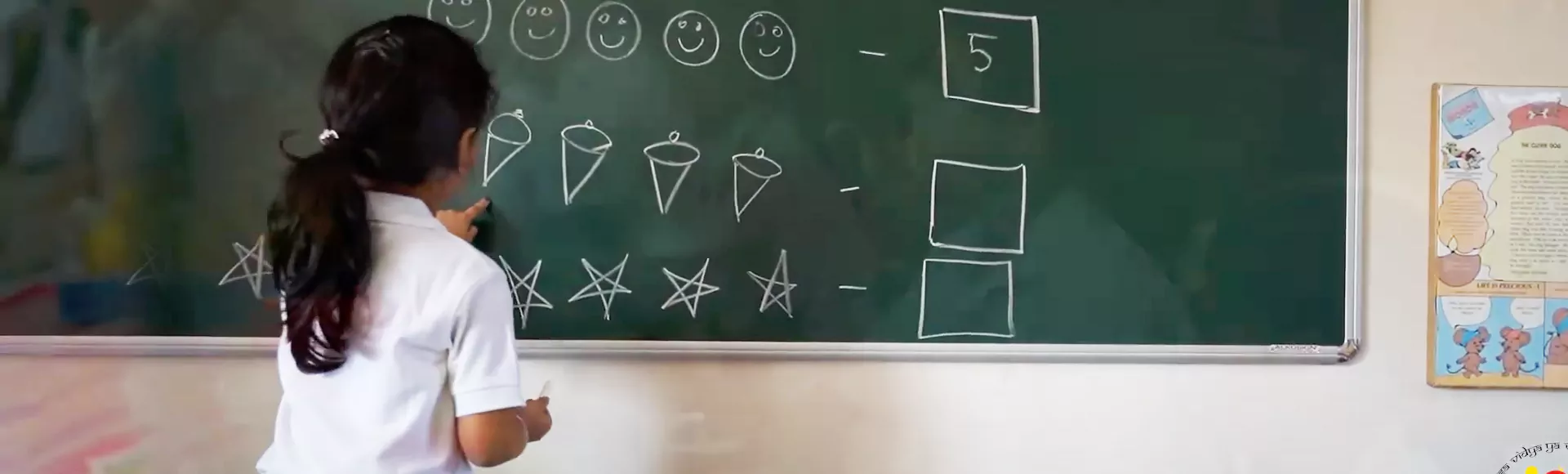

Here's something that surprised me when I first started looking into this: parental involvement at home matters more than almost any other factor in predicting how well a child does in school. More than the school's reputation. More than class size. More than family income, even. Research consistently shows that when parents actively engage with their child's learning at home, children achieve more, behave better, and stay motivated longer.
But here's what nobody tells you: you don't have to become a teacher. You really don't. Your job isn't to explain algebra or correct grammar or drill spelling words until everyone's exhausted. Your job is to create the conditions where learning can happen. Structure. Encouragement. A space that says "this matters."
That's what this guide is about. Practical strategies you can actually do — without a teaching degree, without hours of free time, without turning your kitchen table into a classroom.
Why Parental Involvement in Home Learning Matters
The research here is pretty clear. A meta-analysis of 37 studies found that parental involvement positively impacts academic achievement across grade levels and subjects. And here's the part that matters: home-based involvement — the reading together, the conversations about school, the homework routines — has a greater impact than showing up to school events.
What does that actually translate to?
Higher academic achievement across subjects
Better attendance and fewer behavioural issues
Students with supportive parents are 81% more likely to graduate from high school
Increased self-esteem and motivation to learn
Stronger attitudes toward school in general
You don't need to be an expert in any subject. What you need is to show up consistently, create structure, and communicate — through your actions, not lectures — that education matters in your home.
Creating the Right Learning Environment at Home
Before strategies, before routines, before any of the practical stuff — there's the environment. Both the physical space and the emotional atmosphere. Get these right, and everything else becomes easier.
Setting Up a Dedicated Study Space
You don't need a separate room. Let me say that again, because I know how it sounds when you read "dedicated study space" and you're thinking about your two-bedroom flat. You don't need a separate room.
What you need is consistency. The same spot, every time. A corner of the dining table. A small desk in the bedroom. Even a cleared section of the living room floor with a cushion and a lap desk. The location matters less than the consistency.
Key elements to get right:
Good lighting — natural light if possible, a decent lamp if not
Essential supplies within reach — paper, pencils, scissors, glue, ruler. Nothing fancy. Just available.
Minimal noise and distractions — away from the TV, away from high-traffic areas if you can manage it
A few personalised touches — let your child add something that makes the space feel like theirs
Why does this work? Because a consistent space builds what psychologists call a "mental set." When your child sits in that spot, their brain starts to associate it with focus. It's a signal: this is where we work. Over time, that signal becomes automatic.
Establishing Daily Routines and Schedules
Routines reduce friction. That's the whole point. When homework happens at the same time every day, there's no negotiation, no "but I was just about to..." — it's just what happens at 4:30 or 6:00 or whenever works for your family.
Finding the right time takes some observation. Some children work best right after school, with a snack and a short break first. Others need to burn off energy — play, run around, decompress — and do better after dinner. Watch your child. Notice when they're alert versus when they're dragging.
A few principles that help:
Think in blocks, not rigid minute-by-minute schedules. "Homework time is between 5 and 6" works better than "Math at 5:00, reading at 5:20, spelling at 5:40."
Elementary children need more structure — clear start times, clear end times, you nearby.
Teenagers need a balance of structure and independence — agreed-upon expectations, but room to manage their own time within those boundaries.
Routine builds discipline. It also builds time management skills that will serve your child long after they've left your home.
Minimizing Distractions and Setting Boundaries
This is the hard one. Because the distractions aren't just your child's — they're yours too.
During homework time: TV off. Phones away — yours included. Notifications silenced. If your child needs a device for homework, close every tab and app that isn't directly related to the assignment. (Yes, they'll complain. Yes, it's still the right call.)
The whole household participates. Siblings respect study time. You model focus by not scrolling through your phone while they're working. This isn't about being strict — it's about showing, through your own behaviour, that concentrated work is valuable.
Research from the Child Mind Institute confirms what you probably already know: a distraction-free environment dramatically improves concentration and learning efficiency. Every interruption costs more than the interruption itself — it takes time to get back into the flow.
Supporting Homework Completion Without Doing the Work
This is where most parents struggle. The line between helpful and too-helpful is blurry, and it moves depending on the child, the subject, and the day.
Understanding Your Role as Learning Coach, Not Teacher
Your job is not to teach the content. That's the teacher's job. Your job is to provide structure, encouragement, and guidance. To help your child develop the skills to learn — not to do the learning for them.
When you over-help, children lose ownership of their work. They don't develop independence. They don't learn from mistakes — because you've fixed all the mistakes before anyone could see them. And honestly? Teachers can tell. They can tell when the project was "our project" instead of the child's project.
Healthy support looks like:
Demonstrating study and organisation skills
Explaining a tricky problem when they're genuinely stuck — not at the first sign of difficulty
Encouraging breaks when frustration builds
Checking for understanding without giving answers
The mindset shift is this: it's their homework. Not yours. Your role is to make it possible for them to do it well.
Age-Appropriate Support Strategies
How much involvement is right depends entirely on age. What works for a 6-year-old would be suffocating for a 14-year-old.
Elementary (K-5): Close monitoring. Sit nearby. Read aloud together. Break assignments into smaller chunks. Check work together. This age needs you present — not doing the work, but available and attentive.
Middle school (6-8): Step back a bit. Check in at the beginning and end of homework time. Teach organisational skills — planners, folders, systems. Be available for questions, but don't hover. Encourage independence while remaining accessible.
High school (9-12): Minimal direct help. Monitor deadlines and overall progress. Provide encouragement. Be available when asked — but wait to be asked. Trust them with increasing responsibility.
The pattern is gradual release. You're preparing them to manage their own learning, not managing it for them forever.
Helping Without Giving Answers
This is a skill. It takes practice.
When your child is stuck, resist the urge to solve the problem. Instead:
Ask questions that prompt thinking: "What do you think this means?" "Where could you find that information?" "What have you tried so far?"
Explain a similar example rather than the exact problem they're working on
Break complex tasks into steps: "What's the first thing you need to figure out?"
Teach the problem-solving process, not the solution
This approach builds critical thinking. It builds confidence — the "I figured it out" feeling that no amount of correct answers can replace.
When should you step in? When frustration has crossed from productive struggle into tears or shutdown. When the same problem has consumed 20 minutes with no progress. When your child explicitly asks for help and has genuinely tried first. Otherwise, let them struggle a bit. That's where learning happens.
Building Essential Learning Habits and Skills
Beyond homework, there are foundational skills that support learning across every subject and every grade level. These are the skills that make children independent learners — eventually.
Teaching Time Management and Organization
Children aren't born knowing how to manage time. They learn it by watching you and by practicing with support.
Practical tools that help:
Planners or homework folders — physical ones for younger children, digital or physical for older ones
Colour-coded systems — different colours for different subjects
Backward planning — start from the due date and work backwards to figure out when to start
Prioritising tasks — hard work first, while energy is high
Breaking large projects into milestones — mini-deadlines that make big assignments manageable
And here's the part that matters most: model it. Let your children see you planning your week. Talk through how you're managing your own tasks. Show them that organisation isn't something you're born with — it's something you practice.
Encouraging Reading Habits
If there's one thing you do at home — one single thing — make it reading. Reading is the foundation of everything else. Vocabulary, comprehension, background knowledge, focus, imagination. All of it.
Daily reading recommendations:
Elementary: 20-30 minutes
Older students: 30-60 minutes
But here's what matters more than the minutes: make reading normal. Read aloud to your children — even older ones. Discuss books together. Visit libraries. Let children choose high-interest materials, even if they're not what you'd pick. And let them see you reading. Not on a screen. A book. In your hands. Regularly.
Reading together daily is consistently cited as one of the most effective ways parents can support learning at home.
Developing Study Skills and Learning Strategies
Study skills aren't intuitive. They're taught — or they're not, and children struggle unnecessarily.
Skills worth teaching:
Note-taking basics — what to write down, how to organise it
Active reading — highlighting, annotating, asking questions while reading
Memory techniques — mnemonics, spaced repetition, teaching the material to someone else
Test preparation — practice tests, reviewing mistakes, spacing out study sessions
Different children learn differently. Some need to see it. Some need to hear it. Some need to move while they learn. Help your child discover what works for them — and don't assume it's the same as what worked for you.
Quality over quantity. Always. Two hours of distracted studying accomplishes less than 45 minutes of focused work.
Fostering a Positive Learning Mindset
Attitudes matter as much as actions. Maybe more. The beliefs your child holds about learning — about their own ability, about the value of effort, about what failure means — shape everything.
Setting High but Realistic Expectations
Expect a lot. But expect the right things.
Communicate that effort matters more than perfection. Set expectations based on your individual child's abilities and growth — not compared to siblings, not compared to classmates, not compared to where you think they "should" be.
Discuss goals together. Children are more motivated when they have ownership of their targets. "What do you want to work on this term?" is a better question than "You need to get your math grade up."
Celebrate progress and improvement. Not just final grades. The child who went from struggling to passing worked harder than the child who coasted to an A. Recognise that.
And watch for anxiety. High expectations without warmth creates pressure. High expectations with support creates growth.
Celebrating Effort and Progress, Not Just Results
How you praise matters.
Praise effort: "You worked really hard on that." Praise persistence: "You kept going even when it was frustrating." Praise strategy: "That was smart, trying a different approach." Praise improvement: "Look how much better you're getting at this."
What not to praise — or at least, not exclusively: intelligence. "You're so smart" sounds like a compliment. But research shows that children praised primarily for being smart start avoiding challenges. They don't want to risk looking not-smart. They stick to what's easy.
Children praised for effort take on harder tasks. They see struggle as part of learning, not as evidence that they're failing. That's the growth mindset you're trying to build.
Concrete ways to celebrate: post achievements on the refrigerator. Share progress with grandparents. Verbal recognition at dinner. None of this needs to be elaborate. It just needs to be consistent.
Modeling Lifelong Learning
Children adopt your attitudes more than your advice. This is uncomfortable to hear, but it's true.
If you want your child to value learning, let them see you learning. Read books. Research topics that interest you. Learn a new skill — cooking, a language, a craft, anything. Work on projects. Manage your own responsibilities visibly.
Think aloud about your learning process. "I'm not sure how to do this, so I'm going to look it up." "This is hard, but I'm going to keep trying." "I made a mistake — let me figure out what went wrong."
Show curiosity. Ask questions. Admit when you don't know something. Model looking up answers instead of pretending you know everything.
And talk about your own education. Including the struggles. Including the subjects you found hard. Including how you got through them. Your child needs to know that learning has always been work — even for you.
Staying Connected with Your Child's Education
Supporting learning at home works best when you know what's happening at school. Not every detail. But enough to provide informed support.
Communicating Regularly with Teachers
Teachers are your partners. Not adversaries. Not service providers. Partners.
When and how to communicate:
Attend parent-teacher conferences — all of them
Respond to teacher outreach promptly
Reach out proactively when you notice concerns — be specific about what you're observing at home
Ask about homework policies and expectations
Seek guidance on how to help at home
Approach these conversations cooperatively. Avoid blame. Focus on solutions. "We're noticing that reading assignments are taking a long time — do you have suggestions for how we can support her at home?" works better than "The homework is too hard."
Teachers see your child in ways you don't. They can offer insights and strategies tailored to your child's specific needs.
Monitoring Progress Without Micromanaging
Stay informed. Don't hover.
Ask about the school day and assignments — but don't interrogate. "What was interesting today?" opens more doors than "Did you finish your homework?"
Review completed homework occasionally, not obsessively. Check online grade portals or planners weekly — not hourly. Be available for questions without being constantly present.
Warning signs that require intervention:
Consistent incomplete work
Frequent frustration or tears around schoolwork
Avoiding or hiding assignments
Declining grades that don't match effort
Trust your child with increasing independence. But stay close enough to notice when something's wrong.
Understanding What Your Child is Learning
You don't need to master the curriculum. But knowing generally what your child is working on helps you have meaningful conversations, connect learning to real life, and recognise when extra support might be needed.
Ways to stay informed:
Review syllabi or curriculum guides at the start of the year
Ask teachers about key concepts and skills for the term
Attend school information nights
Explore your child's learning platform or materials
Understanding context helps you support without becoming an expert in content.
Using Everyday Moments as Learning Opportunities
Learning doesn't only happen at desks. Some of the most powerful learning happens in the kitchen, at the grocery store, on a walk. And it doesn't feel like school — which is exactly why it works.
Turning Household Activities into Learning Experiences
Cooking is math. Measuring ingredients, doubling recipes, timing multiple dishes. It's also reading comprehension — following a recipe requires sequencing and attention to detail. And it's science — what happens when you heat butter? Why does bread rise?
Shopping is budgeting. Comparing prices. Calculating discounts. Reading labels. Making lists and checking items off.
Home maintenance is planning and problem-solving. Measuring for a shelf. Figuring out why something isn't working. Following instructions to assemble furniture.
Travel is geography and cultural learning. Reading maps. Noticing differences between places. Asking questions about what you see.
None of this feels like homework. That's the point. Learning becomes part of life, not separate from it.
Encouraging Curiosity and Questions
When your child asks "why" for the fourteenth time in an hour, that's not annoying. Well — it is annoying. But it's also a signal that they're learning.
Instead of just answering, explore together. "I don't know — let's find out." Look it up. Conduct a simple experiment. Take a nature walk and observe. Visit a museum or library.
Create an environment where questions are valued. Ask your own questions out loud. Wonder about things. Model curiosity as a way of moving through the world.
The goal isn't to have all the answers. It's to show that asking questions is how you get them.
Connecting School Learning to Real-World Applications
Children often ask "when will I ever use this?" Fair question. Show them.
Math appears in cooking, shopping, sports statistics, building projects, travel planning. Science explains weather, gardening, how their body works, why the sky is blue. Reading is everywhere — instructions, entertainment, communication, navigation. History lives in family stories, current events, the buildings in your neighbourhood. Writing matters in thank-you notes, messages to friends, job applications someday.
Talk about how you use skills from school in your own work and life. Make the connection explicit: "This is exactly what you're learning in math class."
When learning feels relevant, motivation follows.
When to Seek Additional Support
Sometimes home support isn't enough. That's not a failure — it's a recognition that your child needs something more or different than what you can provide.
Signs Your Child May Need Extra Help
Watch for these patterns:
Consistent struggle despite your support
Homework taking far longer than it should
Frequent tears or frustration around schoolwork
Avoiding or hiding assignments
Grades that don't reflect the effort being put in
Concerns about attention, focus, or behaviour patterns
Learning gaps that seem to be widening rather than closing
Early intervention prevents larger problems. Seeking help is proactive parenting, not an admission of failure.
Exploring Tutoring and Learning Resources
Options for supplemental support include:
Peer tutoring — sometimes a slightly older student explains things in a way that clicks
Professional tutors — specialised expertise and a fresh perspective
Online learning platforms — video tutorials, practice problems, self-paced learning
After-school programmes — structured support in a group setting
Study groups — learning alongside peers
Ask teachers for recommendations. Explore school-based programmes first — many schools offer free or low-cost tutoring. Research community resources. Consider online options for flexibility.
A tutor provides something you can't: a different perspective. Sometimes that's exactly what breaks through frustration.
Collaborating with School Support Services
Schools have systems in place to help struggling students. Use them.
Available services often include:
School counsellors
Learning specialists
Special education evaluations if appropriate
Response to Intervention (RTI) programmes
The process: communicate concerns to the teacher first. Request a meeting if needed. Ask about available supports. Work cooperatively on an intervention plan.
Schools want to help. A partnership approach — you and the school working together — gets the best results for your child.
Frequently Asked Questions
How much should parents help with homework?
Be available and supportive without taking over. For younger children, that means sitting nearby, checking work, helping break tasks into chunks. For older children, it means being accessible for questions while letting them manage their own work. The goal is fostering ownership — if you're doing more work than your child, you've crossed the line. Helping too much prevents the learning that homework is designed to create.
What if I don't understand my child's homework?
You don't need subject expertise to help. When you don't understand the content, help your child access resources: the textbook, online tutorials, classmates, the teacher. Model the problem-solving approach: "I'm not sure either — let's figure out where to find the answer." Focus on the learning process rather than the correct answer. This can actually be a valuable teaching moment — your child sees that not knowing something is normal, and that finding out is what matters.
How long should homework take each day?
Research-based guidelines by grade level:
K-2: 10-20 minutes
Grades 3-6: 30-60 minutes
Middle school: 60-90 minutes
High school: 1.5-2.5 hours
If homework consistently takes much longer than these guidelines, communicate with the teacher. There may be an issue with the workload, or your child may need additional support. Quality matters more than quantity — focused work beats long, distracted hours.
My child refuses to do homework—what should I do?
First, explore the underlying cause. Is the work too difficult? Too easy and boring? Is the timing wrong? Are there attention or focus challenges? Is this a power struggle?
Solutions depend on the cause:
Adjust the routine — try a different time of day
Break work into smaller chunks with breaks between
Use incentive systems if motivation is the issue
Rule out learning difficulties if struggle is consistent
Stay calm and consistent — don't turn homework into a battle
If resistance persists, involve the teacher. If you suspect attention or learning issues, consider a professional evaluation.
Should parents help with projects and assignments?
Yes — but with clear boundaries.
Parent role: helping organise the timeline, gathering materials, checking for understanding of requirements, providing transportation for research if needed.
Child's role: the ideas, the actual work, the creative decisions.
When parents do too much, it becomes "our project" — and teachers can tell. More importantly, your child misses the chance to learn planning and execution skills. Let the project be imperfect. Let it be theirs.
How can working parents support learning at home?
Quality matters more than quantity. Even with limited time, you can:
Establish a dedicated homework time, even if brief
Use weekends for enrichment activities
Read together at bedtime or in the morning
Communicate high expectations and check in regularly
Involve other caregivers in supporting the routine
Consistency and the message that education is a priority make a difference — even when your time is constrained. Your involvement doesn't have to be hours every day. It has to be reliable.
What if my child learns differently than I do?
This is common. And it's okay.
Observe what works for your child. Do they need to see information visually? Hear it explained? Move around while learning? Don't force your methods on them — what worked for you may not work for them.
Be flexible. Let your child teach you their process. Focus on outcomes rather than matching your learning style. And seek teacher input — they see how your child learns in the classroom and can suggest effective strategies.
The goal isn't for your child to learn like you. It's for your child to learn.