

A school partnership can sound impressive on a prospectus and still mean very little to a student. A logo is placed on a poster, somebody visits for an hour, photographs are taken, and the relationship quietly ends. That is contact, but it is not much of a partnership.
A useful partnership does something more concrete. It brings expertise, resources, settings or support into a student’s education that the school could not provide as effectively on its own. The partner may be a local business, an individual professional, an NGO, a clinic, a government group or a cultural organisation. What matters is the connection between that external contribution and a genuine student need.
Vidyanjali Academy’s publicly available material documents several such community connections. These include work with NGOs and government groups on civic issues, collaboration with mental-health NGOs and private clinics, links with local cultural and religious groups, and a specific partnership with the International Association for Adolescent Health. The evidence does not justify claiming that every relationship is permanent or available to every class each year. It does, however, show how external organisations have been used to extend civic learning, wellbeing support and student activities beyond ordinary classroom provision.
That is the honest answer parents usually need. Not “Does the school have partners?” as a yes-or-no question, but “Who contributes, what do they contribute, and what changes for students because of it?”
What Do School Partnerships With Local Businesses and Organizations Involve?
School partnerships involve two or more organisations combining relevant knowledge, time, facilities, people or access around a defined educational purpose. The school brings an understanding of its students, curriculum, safeguarding duties and timetable. The external partner brings something complementary: workplace knowledge, specialist expertise, community access, professional services, equipment or experience with a particular social issue.
The arrangement can be modest and still be valuable. A psychologist may lead a parent session on adolescent wellbeing. An environmental group may help students plan a clean-up or awareness campaign. A local engineer may explain why a classroom design works differently in an actual production environment. A cultural association may help students encounter a tradition through people who practise and understand it.
What turns these activities into a coherent partnership is continuity of purpose. The external contribution should connect with what students are learning before the activity and what they will do with it afterwards. Otherwise, even an engaging visit can become an isolated afternoon that students enjoy but cannot place within a larger learning journey.
There is an operational side too, and it is not glamorous. Someone has to agree on roles, check suitability, coordinate dates, prepare students, obtain consent where required, manage safety, brief the visitor and evaluate whether the activity helped. Agency founders learn the same uncomfortable lesson with external collaborators: enthusiasm at the first meeting means very little when nobody owns the next step. In a school, that lesson matters even more because a vague handover does not merely waste time; it can affect student learning or safety.
Types of Businesses and Organizations Schools Partner With
Schools do not need the longest possible partner list. They need the right mix of relationships for their students and curriculum. A smaller, active group of partners can be more useful than dozens of inactive affiliations.
The relevant categories usually include businesses and professionals who can add practical or career context; NGOs and community organisations that understand social needs; health and wellbeing specialists who provide services beyond teachers’ professional scope; and cultural groups that connect students with local knowledge, practices and communities.
These categories can overlap. A private clinic is both a business and a specialist health provider. A cultural organisation may also be a nonprofit. The label is less important than the partner’s competence, role and educational contribution.
Local Businesses and Professional Experts
Local businesses can make abstract learning more tangible. Accountants, architects, engineers, designers, entrepreneurs, technicians and other professionals can explain how school subjects are used when deadlines, customers, regulations and imperfect information enter the picture.
The strongest contribution is usually not a generic motivational speech. It is a specific encounter with professional thinking. An engineer might show how a design was tested and why the first version failed. A small-business owner might explain costs, customer needs and the compromises behind a seemingly simple product. A designer might work through feedback on student prototypes rather than presenting a polished portfolio.
Businesses may also offer workplace visits, project briefs, mentoring, equipment or demonstrations. Each option requires judgement. An impressive facility tour has limited value if students cannot understand what they are seeing. A simple workshop in the classroom may be more useful when it is designed around the students’ current level and followed by a task they can complete themselves.
For that reason, the school should define the learning objective before approaching a business. “Please inspire our students” is vague. “Help Grade 9 students understand how measurement, material selection and quality checks affect a real product” gives both sides something workable.
NGOs, Nonprofits and Community Organizations
NGOs and community organisations can connect students with issues that are difficult to understand through textbooks alone. Education access, poverty, public health, waste management, disability inclusion and environmental responsibility become less abstract when students encounter the people and systems involved.
The relationship needs care. Community work should not turn the people being served into a lesson prop, and students should not be led to believe that one collection drive solves a structural problem. A responsible partner helps the school explain context, identify an appropriate contribution and treat community members with dignity.
Vidyanjali’s published material says the school connects students with NGOs and government groups around issues including education, the environment and poverty. It also describes tree planting, clean-up activities and awareness initiatives. Those examples are relevant because the partner is not presented merely as a sponsor. The connection is intended to give students a route from discussing civic responsibility to taking part in community-facing action.
Health, Wellbeing and Specialist Organizations
Some student needs require expertise that classroom teachers should not be expected to provide. Licensed psychologists, counsellors, therapists, medical professionals and specialist organisations can extend a school’s ability to identify concerns, support families and make appropriate referrals.
Vidyanjali states that it collaborates with mental-health NGOs and private clinics to provide therapy sessions, diagnostic screenings and counselling camps for parents and children. The school’s wellbeing material places this external support alongside on-campus counselling, teacher referrals, an in-house special educator and parent workshops.
That combination matters. An outside professional should not appear for one day and become the school’s entire wellbeing system. Students need clear routes to support before and after a session. Teachers need to know what they should notice and when they should refer. Families need privacy, accurate information and realistic expectations about what a school-based activity can and cannot do.
The phrase “diagnostic screening” also carries responsibility. Screening is not automatically a diagnosis, and mental-health information is sensitive. A meaningful partnership needs qualified professionals, informed processes, confidentiality safeguards and a referral path when a student requires continuing care.
Cultural and Community Groups
Local cultural and community groups can make heritage learning more immediate. They may contribute stories, language knowledge, artistic practice, historical context, celebrations or opportunities for students to participate in community events.
Vidyanjali’s civic-learning content states that the school partners with local cultural and religious groups and links their participation with civic activities. The educational value comes from encounter and explanation, not simply observation. Students should be able to ask what a practice means, how it has changed and why it matters to people in the community.
Schools also have to handle cultural partnerships inclusively. Presenting one community’s tradition should deepen understanding without suggesting that every student shares the same belief or identity. Clear educational framing allows culture to be explored with curiosity and respect rather than reduced to decoration for a school event.
How These Partnerships Support Student Learning
External partnerships support learning when they close a real gap. The gap may be between theory and practice, between a student and a specialist service, or between a classroom topic and the community affected by it.
This does not mean every lesson needs an outside organisation. Teachers remain responsible for the educational sequence. Partners are most valuable when their contribution is difficult to reproduce internally and arrives at the right moment. A professional’s demonstration after students have attempted their own project, for example, can help them compare their decisions with real practice. The same demonstration given without preparation may produce interest but little durable understanding.
The following mechanisms describe how the relationship can become useful to students rather than merely visible to adults.
Guest Speakers, Workshops and Expert-Led Sessions
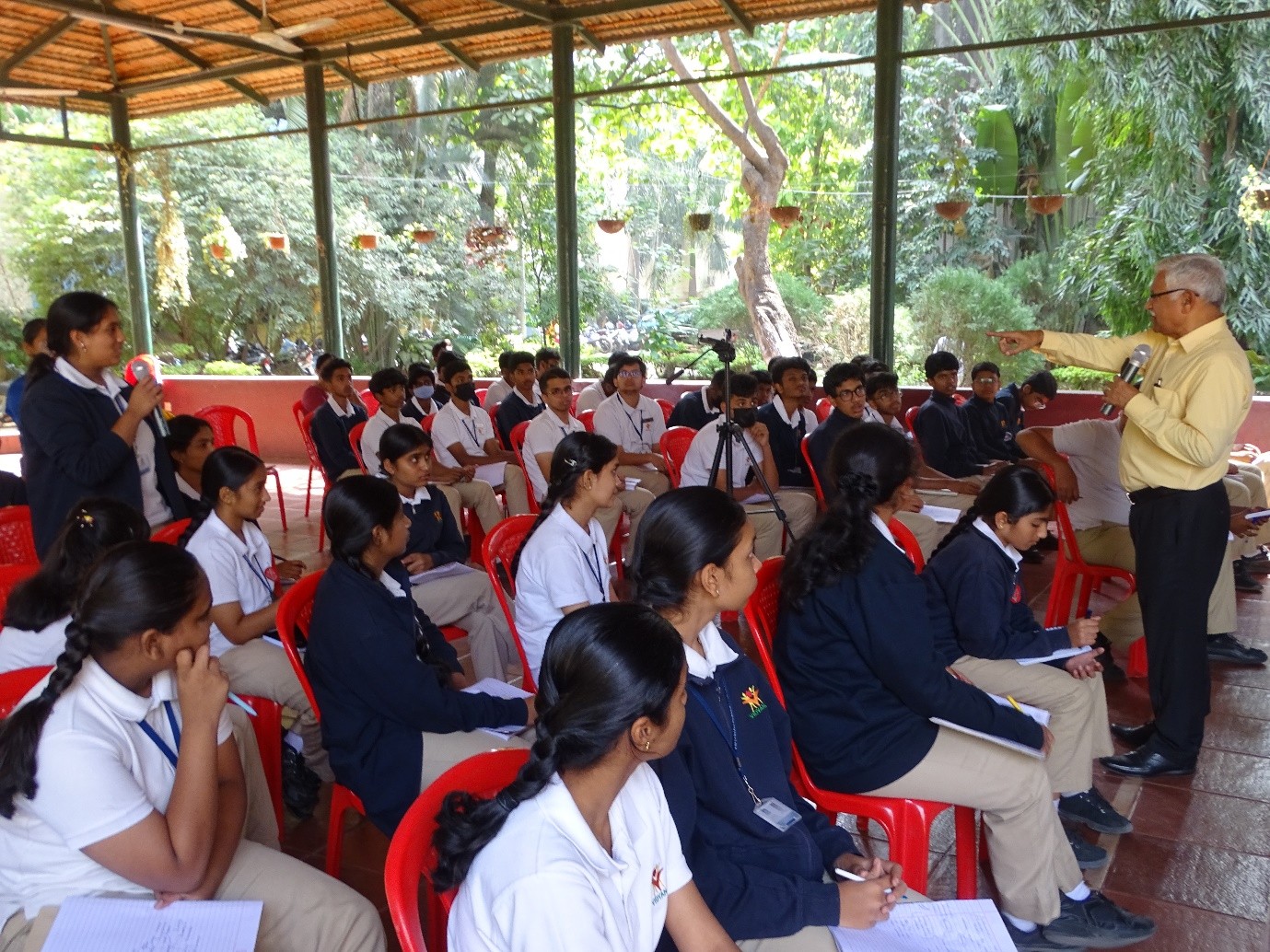
Guest sessions can expose students to knowledge, tools and experiences beyond the school staff’s normal specialisms. The format can range from a short talk to a multi-session workshop in which students produce, test or revise something.
The workshop format is often stronger because it requires students to do more than listen. A mental-health professional might help students identify healthy ways to respond to stress. A civic organisation might guide a class in designing an awareness campaign. A creative professional might demonstrate a technique and then respond to student work.
Preparation changes the quality of the session. Students need enough background to ask useful questions. The speaker needs the age group, prior knowledge, learning goal and any accessibility needs. Afterwards, a teacher should help students interpret what they heard rather than assuming the learning is self-explanatory.
There is a simple test: if the visitor cancelled, could the school explain precisely what learning opportunity would be lost? If the answer is only “students would miss meeting an interesting person,” the session probably needs a clearer purpose.
Mentoring and Guidance From Professionals
Mentoring creates a more sustained relationship than a single talk. A professional can help students refine an idea, see how decisions are made in practice and understand the habits behind competent work. The value is not that the mentor provides all the answers. It is that students receive informed questions and feedback from someone who knows the field.
Good mentoring needs boundaries. The school should define how students and mentors communicate, which adults supervise, how often they meet and what the mentor is—and is not—responsible for. A business expert may guide a student project without being qualified to advise on wellbeing. A counsellor may support emotional health without becoming an informal academic tutor.
Matching matters as well. A mentor’s impressive title does not guarantee that the person can communicate with adolescents. Patience, reliability and the ability to explain decisions are often more valuable than status.
Field Visits and Real-World Learning Experiences
Field visits allow students to see systems, workplaces and community settings that cannot be recreated in a classroom. A visit can reveal the scale of equipment, the coordination between roles, the effect of safety rules and the difference between a diagram and a working environment.
But a bus ride is not automatically experiential learning. Students should know what to observe, whom they may question and how the visit connects with their current work. A focused observation sheet or a small post-visit task can be more useful than asking everyone to write a generic report.
The host organisation also needs preparation. Staff should understand the age group and avoid either overwhelming students with jargon or turning the visit into a marketing presentation. Safety, accessibility, supervision, travel, permissions and photography rules should be resolved before students arrive.
Community Service and Social-Impact Initiatives
Community initiatives give students an opportunity to contribute, but the contribution should respond to an identified need. The partner organisation often knows that need better than the school does. It can explain whether the useful action is awareness, volunteering, fundraising, collection, research or something else entirely.
Vidyanjali’s civic material describes clean-up drives, tree planting, awareness events and service projects, as well as connections with NGOs and government groups. Read together, these examples show a practical model: a community issue is introduced, students take part in an organised response, and the activity is connected to responsibility and citizenship.
Reflection should follow action. Students can consider what the initiative changed, what it did not change, who made the important decisions and what a longer-term response would require. That conversation prevents service from becoming a photo opportunity and helps students develop a more realistic sense of social impact.
Access to Specialist Resources, Facilities and Expertise
Partners can make resources available that would be expensive, rarely used or inappropriate for the school to maintain by itself. These may include laboratories, specialist software, therapeutic services, professional equipment, community spaces or access to trained personnel.
Access should be purposeful and reasonably equitable. If only a small group can use a resource, the selection criteria should be clear. If students need prior preparation, the school should provide it. If the resource generates sensitive information—as a wellbeing screening might—the school needs suitable consent and privacy arrangements.
The school should also avoid becoming dependent on a partner without a fallback. A donated tool is not very helpful when nobody can maintain it. A specialist programme that disappears midway through the year can leave students unsupported. Sustainability belongs in the partnership decision from the beginning.
Connecting Classroom Learning With the Real World
The phrase “real-world learning” is used so often that it can lose meaning. In practice, it means showing students how knowledge behaves outside a carefully controlled exercise.
A mathematics problem may have one stated answer; a local enterprise has incomplete data, changing costs and decisions that affect people. A science lesson may isolate a variable; environmental work involves weather, public behaviour, regulations and competing priorities. A civics chapter may define responsibility; a community project asks who is responsible, what can realistically be changed and how different groups should work together.
Partners bring those complications into view. The school’s job is to keep the experience intelligible. Students still need concepts, vocabulary and structured reflection. The external setting does not replace academic learning; it gives the learning somewhere to operate.
This connection can be planned as a simple sequence: learn the core idea, encounter it in practice, attempt a relevant task, receive expert feedback and reconsider the original idea. When all five parts are present, the partnership becomes part of the curriculum rather than an interruption to it.
How Partnerships Give Students Wider Exposure and Opportunities
Partnerships can widen what students imagine for themselves. They encounter adults with different skills, organisations with different purposes and problems that do not fit neatly into a subject period. A student may discover an unfamiliar profession, a community issue worth pursuing or a strength that ordinary classroom work had not revealed.
Exposure is particularly valuable when it goes beyond the most visible careers. Students already hear about doctors, engineers and entrepreneurs. They may know less about counsellors, laboratory technicians, nonprofit programme managers, environmental planners, public-health workers, designers or the many operational roles that keep an organisation functioning.
The opportunity should still match the student’s stage. Younger children may benefit from demonstrations and guided activities. Older students may be ready for project briefs, mentoring, visits or structured volunteering. Offering the same activity to everyone can be easier administratively, but thoughtful differentiation produces better learning.
Schools also need to watch who repeatedly receives these opportunities. If participation depends on confident self-nomination, available transport or family connections, the same students may benefit each time. Teachers can broaden access by communicating early, inviting students whose interests are less visible and addressing practical barriers where possible.
What Makes a School Partnership Meaningful?
A meaningful partnership has a clear educational reason, competent participants and enough continuity to learn from experience. It is not defined by the size of a donation, the fame of the organisation or the number of logos on school material.
The practical signs are fairly ordinary: both sides know what they are doing, communication happens on time, students are prepared, safety is treated seriously, and someone checks whether the activity worked. These details may not make an exciting announcement, but they determine whether the relationship serves students.
Shared Educational Goals and Clear Roles
Before an activity begins, the school and partner should agree on the intended learning, participating students, responsibilities, schedule, resources and limits. If personal information or photographs are involved, consent and data handling should also be explicit.
Clear roles prevent common frustrations. The partner should not discover on arrival that no room or equipment has been arranged. Teachers should not assume an external speaker will manage classroom behaviour without support. Families should not receive essential details at the last moment.
There should also be room to say no. A sponsorship offer may be generous but commercially inappropriate for children. An organisation may propose an activity that does not fit the curriculum or cannot meet safeguarding expectations. Leadership sometimes means declining a visible partnership because the student value is unclear.
Ongoing Collaboration and Evaluation
Partnerships improve when both sides review them honestly. Attendance and smiling photographs say little about learning. More useful evidence may include student work, teacher observations, student questions, referrals completed, project outcomes or feedback from families and partner staff. This is another decision agency operators recognise: continuing a collaboration because it looks good is easier than admitting that it no longer produces a useful outcome. A school cannot afford to confuse visibility with value.
Evaluation does not have to become a heavy reporting exercise. The school can ask what students understood, what they could do afterwards, which group was left out and what should change next time. The partner can explain where the brief was unclear or the preparation insufficient.
Continuity does not mean repeating the same event forever. It means using evidence to decide whether to continue, adapt, expand or stop. Ending an activity that no longer serves students can be a sign of responsible management, not failed collaboration.
Keeping Student Learning, Safety and Wellbeing at the Center
Every partnership sits inside the school’s duty of care. External adults need appropriate checks and supervision. Activities need risk assessment, accessibility and age suitability. Health or counselling work requires qualified providers, confidentiality and a clear escalation process.
Student voice matters, especially when the activity concerns wellbeing, identity or community service. Students should understand why they are participating and, where appropriate, have a genuine choice. A reluctant disclosure in a public workshop should never be treated as proof of engagement.
Commercial influence requires similar care. Businesses can contribute valuable expertise without turning the classroom into an advertising channel. The educational goal should determine the content, and the school should retain control over student access, data, branding and communication.
Partnerships and Community Connections at Vidyanjali Academy
Vidyanjali’s published evidence supports a specific, bounded picture of its partnerships. The school reports community connections in civic education, external support in mental health and wellbeing, collaboration with the International Association for Adolescent Health, and engagement with cultural and religious groups.
It would be easy to inflate that evidence into a much broader claim about a vast permanent network. That would not help a parent. Public pages show examples and stated practices; they do not provide a complete current register of every partner, contract, duration or participating grade. Families interested in a particular opportunity should ask the school whether it is running in the current academic year and how students take part.
Within that boundary, the documented examples are useful because they show different partnership functions rather than repeating the same model.
NGO and Government-Group Connections for Civic Learning
In its article on civic duty and volunteerism, Vidyanjali says it connects students with NGOs and government groups to learn about education, environmental concerns and poverty and to participate through action. The same page describes clean-up drives, awareness campaigns, tree planting and service-related projects.
The educational logic is strong when those pieces are connected. External groups provide context and routes into community issues; teachers connect the experience to civic ideas; students contribute through a suitable activity; and reflection helps them understand both the value and the limits of their contribution.
The school’s page also refers to several national volunteer organisations and programmes. Those references should not automatically be read as proof of a formal, current partnership with every named body. The safer verified claim is the one the school states directly: it uses NGO and government-group connections to extend civic learning outside theory.
Health and Wellbeing Partnerships
Vidyanjali’s mental-health and wellbeing material states that the school collaborates with mental-health NGOs and private clinics. The described activities include therapy sessions, diagnostic screenings and counselling camps for parents and children.
This external layer sits within a wider support model that the same page describes: on-campus emotional counselling, an in-house special educator, teacher training, parent workshops, teacher referrals and review of wellbeing information. That context matters. A clinic or NGO can bring specialist capacity, but students still need a trusted school process that helps them reach it and receive appropriate follow-up.
Parents considering this support would reasonably want to ask who the current providers are, what qualifications apply, whether services are screening or treatment, how consent works, how records are protected and what happens when longer-term care is recommended. Those are not hostile questions. They are the questions a serious partnership should be able to answer.
Partnership With the International Association for Adolescent Health (IAAH)
Vidyanjali’s October 2024 Bugle records a specific partnership with the International Association for Adolescent Health. On 11 September 2024, the school held essay-writing and Poster Mania competitions around the theme of building team resilience.
The report names Grade 9 students Sai Sreeja Konda, Pruthviraj K P and Susheel Veerabhadrarao Choragudi as the first-, second- and third-place essay winners. It also records Isha G of Grade 9 in second place and Sonakshi Reddy of Grade 6B in third place in the poster competition. The Bugle says the essays were subsequently featured in We Connect magazine.
This is the clearest documented incident in the school’s published material because the partner, date, theme, activities and outcomes are all identified. It shows what a partnership can look like at student level: an external adolescent-health organisation contributes a relevant theme and platform, students respond through writing and visual communication, and selected work reaches a wider audience.
The value is not limited to the prizes. Resilience and teamwork can be discussed in class, but an essay or poster asks a student to form and communicate a position. Publication then gives that work an audience beyond the original assignment.
Local Cultural and Community Partnerships
Vidyanjali states that it works with local cultural and religious groups as part of community involvement. Its civic-learning article explains that seeing respected community members take part can make civic values feel more immediate and relatable to students.
This kind of connection can support cultural understanding, shared events and community participation, provided it remains inclusive and educationally framed. Students benefit when they learn why a tradition or community practice matters, not merely what clothing, food or performance is associated with it.
The public material does not name each local group or specify whether every relationship is continuing. It is therefore more accurate to describe the partnership category and its stated purpose than to invent a directory the school itself has not published.
Turning Community Partnerships Into Meaningful Student Experiences
The best school partnerships follow a visible chain: an identified student need leads to the right external partner; the partner contributes relevant expertise, access or resources; teachers prepare and guide the experience; and students use what they encounter through a project, discussion, service activity or support pathway.
Vidyanjali’s documented examples cover several points on that chain. NGO and government-group connections bring civic issues closer to action. Mental-health NGOs and clinics extend specialist support. Cultural groups connect community participation with lived traditions. The IAAH activity turned an adolescent-health theme into essays, posters, recognition and publication.
None of this means that a partnership is automatically valuable because an outside organisation is involved. The school still has to make choices—sometimes difficult ones—about relevance, access, safety, continuity and evidence of learning. It must be willing to improve a relationship that is underperforming and to end one that no longer serves students.
For parents and students, the most revealing questions remain practical: What will students actually do? Who will guide them? How does the activity connect with their learning or wellbeing? Who can participate? What safeguarding applies? What happened after the last event?
When a school can answer those questions clearly, its community partnerships stop being names on a page. They become what they were supposed to be in the first place: carefully built routes to expertise, support, participation and experiences that students could not gain from the classroom alone.