

When Sri Ramaiah Reddy Educational Trust founded Vidyanjali Academy in 1992, its stated purpose was broader than academic delivery: it wanted to provide holistic learning. Director Dr Rekha Reddy describes the school as a collaboration among teachers, learners and parents, intended to help children develop academically, socially and emotionally and become responsible citizens.
That is a strong founding position. The harder question is whether families can feel it in ordinary school life.
One of Vidyanjali Academy’s published parent accounts gives us something concrete to examine. The Mariyappan family first wanted a nearby school that felt safe and fair for two children. Their relationship with the school did not stop after admission. They describe meeting other parents through orientation programmes, Parent Empowerment events, Open Houses and Munch Melas. Parents took roles alongside teachers, shared suggestions and participated in school life. Over the years, those repeated interactions helped the parent community become what the family described as a close support group.
No single event created that result. There was no dramatic turning point. Families were simply welcomed back, given useful roles and heard often enough for familiarity to become trust.
That contrast matters because a school can be physically located in a neighbourhood and still remain separate from it. Students enter, lessons happen, circulars travel outward and everyone leaves. A yearly event may produce attendance without producing a relationship.
Genuine school–community engagement is the slower alternative. The school contributes knowledge, facilities, student energy and educational purpose. Parents, professionals, organisations, volunteers and residents contribute experience, perspective, time and support. Students learn inside that exchange rather than observing community life from a distance.
What Does School–Community Engagement Mean?
School–community engagement is an ongoing relationship between a school and the people, families, institutions and organisations around it. The relationship supports student learning while also giving students age-appropriate ways to understand and contribute to their wider community.
The word “ongoing” matters.
A guest speaker can enrich one lesson. A charity drive can respond to an immediate need. A cultural event can bring families together for an afternoon. Each may be valuable, but isolated activities do not automatically create engagement. A relationship begins when the school and community continue communicating, learning from one another and working toward shared purposes.
It is also broader than parent involvement. Parents are the closest partners, but a school may engage local professionals, non-profits, health specialists, cultural groups, businesses, libraries and public institutions. Their roles should be appropriate to the school’s needs and the students’ age—not partnerships added simply to make a list look impressive.
The simplest test is reciprocity. Does the school only ask the community for help, or does it also contribute? Do families only receive instructions, or can they respond? Are students taken out for “exposure,” or are they helped to understand the people and context they encounter?
Engagement becomes meaningful when participation travels in both directions.
How Schools Engage With the Local Community
There is no universal activity calendar for community engagement. A school in a large city will have different opportunities and needs from one in a smaller town. The useful patterns are more consistent: build trust with families, invite relevant expertise, create service opportunities, open parts of school life to participation, communicate clearly and make room for feedback.
Building Partnerships With Parents and Families
Parents are not visitors to a child’s education. They hold knowledge that the school cannot obtain from assessments alone: how the child responds at home, what worries them, where they are becoming more independent and what recent change may explain a shift in behaviour.
Teachers hold a different part of the picture. They observe the student in learning, group work, friendship and structured responsibility. Partnership begins when both forms of knowledge are respected.
At Vidyanjali, the Parent Engagement Conference is held after assessments so parents and teachers can discuss progress and areas needing support. The school also documents Parent Empowerment Day sessions tailored to different age groups. In 2024, invited specialists addressed positive discipline, well-being, academic pressure, peer influence and adolescence. In 2025, sessions included self-reliance, emotional resilience, child protection, bullying and cyber safety.
This is more useful than involving parents only when a problem has already become serious. Families receive context and tools; teachers hear questions and concerns; the relationship has a chance to become preventative rather than reactive.
Partnering With Local Organizations and Businesses
Local organisations can extend what a school is able to offer, but the partnership needs a clear educational purpose.
A non-profit may help students understand a community issue before they attempt service. A health organisation may provide specialist guidance beyond a teacher’s professional role. A local business may introduce students to an occupation, offer career context or support a carefully supervised learning opportunity.
Vidyanjali’s published account of its RT Nagar involvement states that it collaborates with local institutions and non-profits, and that local business relationships are used for real-world exposure and career guidance. Its mental-health material also describes collaboration with mental-health NGOs and private clinics for specialist services such as counselling, screenings and support programmes.
Those relationships should never be described more strongly than the evidence allows. A logo on a poster is not proof of an effective partnership. The better questions are practical: What did the partner contribute? Which students or families were served? Was the activity safe and relevant? Did the school continue the relationship or learn something that changed its next step?
Inviting Local Professionals and Community Experts Into Learning
A professional can make an abstract subject feel immediate.
Students may have read about emotional well-being, public health, technology, law, the arts or careers. Someone working in that field can explain how decisions are made in practice, what common misconceptions look like and why professional responsibilities matter.
The most credible Vidyanjali examples come from its Parent Empowerment programmes. The school has brought psychologists, psychotherapists, health professionals and child-safety experts into sessions with families. In August 2025, for example, Dr Sowmya Puttaraju led a session on raising confident, independent children, while Dr Ashwini N. V. addressed parents on child sexual abuse prevention and intervention, the POCSO framework, warning signs, bullying and cyber safety.
These were not generic motivational appearances. The expertise matched a defined family need and age group. That alignment is what turns a guest visit into useful community-supported learning.
Students can benefit from the same principle. A local artist, engineer, entrepreneur, environmental worker or healthcare professional should not be invited merely because they are available. Their contribution should connect with something students are studying, questioning or preparing to do.
Connecting Students With Community Service and Outreach
Service gives students a chance to move from discussing responsibility to practising it.
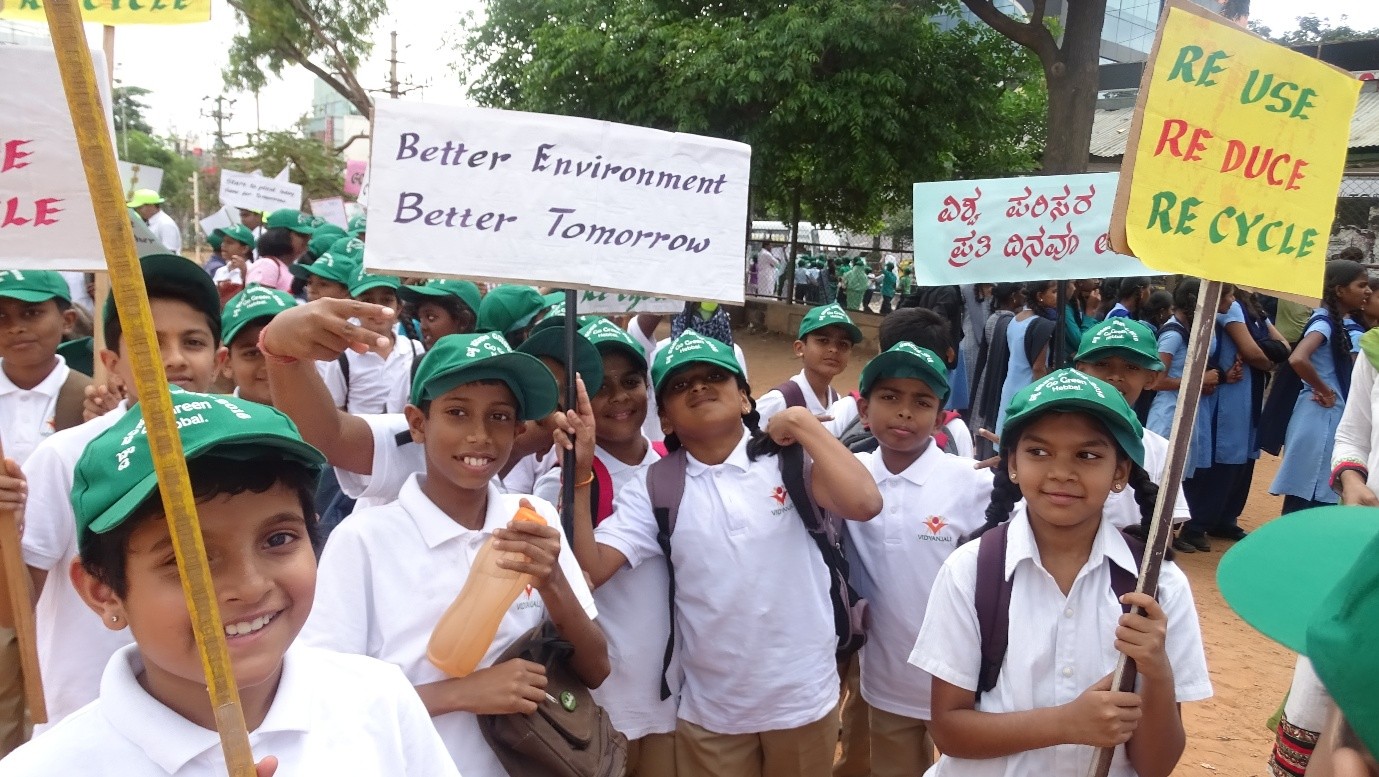
In its material on civic duty and volunteerism, Vidyanjali documents charity drives, cleanliness campaigns, peer mentoring, awareness initiatives and community-oriented projects. These activities can help students see that neighbourhood concerns are not someone else’s subject to solve.
But service can become shallow very quickly. Students arrive, complete a visible task, take photographs and leave without understanding why the need existed. A better process begins before the event. What does the community or partner organisation say is needed? What can students realistically contribute? What safety or dignity concerns must be protected?
Reflection after the activity matters too. A cleanliness drive may remove waste for a day. Students can then ask why it collected there, whether disposal systems are adequate and what preventive action may be more useful next time. That is where outreach stops being performance and becomes learning.
Bringing Families and the Community Into School Events
Community engagement should not only send students outward. Schools can also create spaces where families and local people enter school life.
Vidyanjali’s public gallery and parent accounts refer to events such as Grandparents’ Day, Meet and Greet programmes, cultural celebrations, Open Houses, Munch Melas and Parent Empowerment events. Their value is not merely that a crowd attends. Shared events allow people to know teachers outside a problem-focused meeting, see students contribute in different ways and meet other families whose children share the same environment.
The Mariyappan family’s account is especially helpful because it describes what happened across years. Repeated events gave parents opportunities to take roles alongside teachers. The family connects those experiences with stronger relationships among parents and the development of a mutual-support network.
That is a more meaningful outcome than attendance alone. The event became a doorway into an ongoing community.
Creating Volunteer and Mentoring Opportunities
Student service and community volunteering are related, but the direction is different.
When students serve, they contribute to the community. When community members volunteer or mentor, local knowledge and time flow into the school. Parents may help organise an event, professionals may guide students, alumni may share experience, and other suitable volunteers may support tutoring or projects.
Vidyanjali’s RT Nagar community material says parents and residents are invited into school activities and describes opportunities involving tutoring, community service and events. The school also identifies mentorship as part of its support structure.
These roles require boundaries. Adults working with children need appropriate selection, supervision and safeguarding. Mentoring needs a clear purpose and realistic expectations; it should not depend entirely on one enthusiastic person with no continuity plan.
Done carefully, volunteering does more than give the school extra hands. It allows students to encounter adults who contribute because they care about learning and community life.
Using Local Community Resources to Enrich Learning
Not every valuable learning resource belongs to the school.
Libraries, cultural organisations, local institutions, workplaces, public facilities and neighbourhood environments can provide material that a classroom cannot reproduce. A local visit may show students how a service operates. A cultural organisation can add context to language, art or history. A community setting can turn an environmental topic into something students can observe directly.
Vidyanjali’s school calendar documents “Going Out” experiences across age groups, while its community materials refer to local institutions, professionals and organisations contributing to learning. The educational value depends on preparation. A visit without questions can become an outing; the same visit, connected to prior learning and followed by reflection, becomes a resource.
Local does not automatically mean relevant. Schools still need to ask why a resource fits the learning goal, whether it is accessible and safe, and what students should be able to understand afterwards that they could not understand as clearly before.
Maintaining Open Communication With Parents and the Community
Relationships weaken when communication happens only during admission, fee reminders or conflict.
Useful communication is regular, understandable and proportionate. Families need to know what is happening, why their participation is being requested and where they can ask a question. The school also needs channels that do more than broadcast.
Vidyanjali uses Parent Engagement Conferences, meetings, newsletters and digital communication to keep families informed. Its parent testimony adds the human side: parents describe being able to speak, suggest improvements and build rapport with staff rather than remaining anonymous recipients of instructions.
Open communication does not mean every suggestion must be accepted. It means people receive a respectful hearing, decisions are explained where appropriate, and difficult conversations are not avoided until frustration takes over.
Trust is usually built in these unremarkable exchanges long before the school needs it during a crisis.
Giving Parents and Community Members a Voice in School Life
There is a difference between asking parents to attend and allowing them to participate.
Participation may include feedback on programmes, parent surveys, advisory roles, event responsibilities and discussions about support needs. The boundary must remain clear: educators retain professional responsibility for teaching, safeguarding and school operations. Voice does not mean handing every decision to the loudest stakeholder.
The Mariyappan family reports that Vidyanjali gave parents opportunities to express opinions, suggest improvements and be heard. The school’s community material also refers to feedback channels and advisory participation involving parents, educators and local leaders.
This can be uncomfortable. Feedback sometimes challenges a plan the school has worked hard to create. Yet listening early can reveal access problems, unclear communication or unmet family needs that internal planning missed.
The strongest response is not defensiveness or automatic agreement. It is a visible process: listen, clarify, decide, explain and review.
How Community Engagement Enriches Student Learning
Community engagement matters educationally because it brings relationships, expertise and consequences into learning.
A student can study civic responsibility and then see adults volunteer their time. They can learn about communication and later explain an initiative to families. They can discuss well-being in class while parents learn from professionals how to support the same needs at home.
The subject is no longer confined to one period on the timetable.
Building Empathy, Responsibility and Civic Awareness
Students develop civic awareness when they recognise that shared life depends on participation. A clean neighbourhood, supportive school or safe community does not appear automatically. People maintain it through choices, systems and effort.
Service projects can make that visible, but only if students are helped to look beyond their own role. Who identified the need? Who has been working on it already? What did the students contribute, and what could not be solved through one activity?
Humility matters here. A school should not suggest that students “saved” a community through a short project. The more valuable lesson is that responsible contribution begins with listening and continues after the visible event.
Providing Real-World Learning and Mentorship
Community expertise introduces students to uncertainty that textbooks often simplify.
A professional can explain why real decisions involve trade-offs. A mentor can show how interests develop into skills over time. A local organisation can help students understand why a social issue does not have one quick solution.
Vidyanjali’s use of health and child-development professionals illustrates the point. Families did not only receive broad advice to “support children.” Sessions addressed specific concerns such as discipline, adolescence, cyber safety, emotional resilience and child protection.
For students, equally focused mentorship can connect learning with future possibilities without pressuring them to choose a career too early. The mentor’s role is to widen understanding, not write the child’s future for them.
Strengthening Belonging and the School Support Network
Belonging grows when people know one another before they need help.
A parent who has met other families through school events is less isolated. A teacher who has spoken with a parent outside a crisis has more context. A student who sees family, school and community adults cooperating receives a consistent message that their learning is shared work.
The Vasa family’s Vidyanjali account emphasises comfort, close knowledge of students and rapport with teaching and non-teaching staff. The Mariyappan family describes the parent community becoming closer through repeated participation. These are personal accounts, not universal proof. Still, they show what a support network looks like from the family side: familiarity, access and relationships that persist beyond one meeting.
What Makes School–Community Engagement Effective?
Activity volume is a poor measure of engagement.
A school may run many events while families remain unheard and partnerships disappear after the photographs are published. Strong engagement is better judged by relevance, reciprocity, continuity and learning.
Was the activity connected to an identified need? Did the participating people have meaningful roles? Did students learn something they could explain? Did the school gather feedback? Is there a responsible next step?
Those questions are less glamorous than an event total. They are also more useful.
Two-Way Participation, Not One-Way Outreach
One-way outreach treats the community as either a beneficiary or a resource. The school gives help, or the school asks for help. Two-way engagement recognises that everyone may contribute knowledge while still having different responsibilities.
Parents share insight into their children and receive educational guidance. Professionals bring specialist knowledge and learn what families are asking. Students contribute through service and gain a more grounded understanding of their locality. Organisations support school initiatives while helping students encounter real community needs.
Reciprocity does not require equal contribution in every activity. It requires respect, clarity and the willingness to learn in both directions.
Ongoing Partnerships Rather Than One-Off Activities
Continuity changes the quality of a relationship.
The first parent meeting may establish contact. Repeated conferences allow progress to be reviewed. One professional session may answer immediate questions; a continuing relationship can support referrals, follow-up or better programme design. A service day can raise awareness, while a sustained project lets students observe whether their effort had any durable effect.
This does not mean every activity must continue forever. Some needs are temporary. The school should still close the loop: record what happened, gather feedback, decide whether to continue and explain the next step.
Vidyanjali’s recurring Parent Engagement Conferences and annual Parent Empowerment programming show this continuity more clearly than a single promotional event could. Different sessions respond to the changing concerns of children and families across age groups.
How Vidyanjali Academy Engages With Families and the Wider Community
Vidyanjali Academy’s documented approach combines several forms of engagement rather than relying on one annual programme. That practice is consistent with Dr Rekha Reddy’s stated belief that teachers, learners and parents must function collaboratively. The important point is not the language of the belief; it is whether the school has built repeated opportunities through which collaboration can actually happen.
Families participate through Parent Engagement Conferences, orientation programmes, Open Houses, Munch Melas and Parent Empowerment Days. The school’s records show sessions led by psychologists, psychotherapists, health professionals and child-safety specialists, with topics matched to different student age groups. Parent accounts describe opportunities to work alongside teachers, express concerns and suggest improvements.
The wider community enters through local institutions, non-profits, health organisations, private clinics, professionals, cultural groups and local business relationships described in the school’s published material. These connections support areas such as counselling, awareness, career exposure, mentoring and community-oriented learning.
Students participate through charity drives, clean-up activities, awareness programmes, peer mentoring and other service-based projects. The school also records “Going Out” experiences that can connect learning with places and people beyond campus.
It would be easy to turn this into a long programme list. The more important pattern is relational. Parents are not approached only as an audience. Professionals are invited for defined expertise. Students are not kept entirely inside the school. Feedback and repeat contact give the relationships a chance to develop.
The Mariyappan family’s account brings those pieces together. Their experience began with the practical need for a suitable nearby school. Over time, participation connected them with staff and other parents. The result they describe is not a spectacular intervention, but something more believable: a parent community that became closer and more supportive through repeated shared experiences.
That is what sustained engagement is supposed to do.
Building Stronger Connections Between School and Community
A school does not have to solve every local problem to be a responsible community institution. It does need to avoid behaving as though education happens in isolation.
Students belong to families, neighbourhoods and a wider civic life. Parents hold knowledge the school needs. Local professionals and organisations can bring expertise that teachers should not be expected to provide alone. The school, in turn, can create learning, service and gathering spaces that strengthen the community around it.
The relationship will not always be tidy. Feedback may be difficult. A partnership may produce less than expected. An event may attract the same small group of families. Honest engagement notices those weaknesses instead of counting the activity as successful merely because it occurred.
Then it tries again—with a clearer purpose, better access and more listening.
The lesson is not that every programme worked perfectly; the available accounts do not establish that. It is that a founding commitment to collaborative, holistic education becomes credible only when families and community partners encounter it repeatedly in practice.
The strongest school–community connection is therefore not the busiest calendar. It is a continuing habit of participation in which students learn from the community, families have a meaningful voice, and the school contributes beyond its boundary wall.