


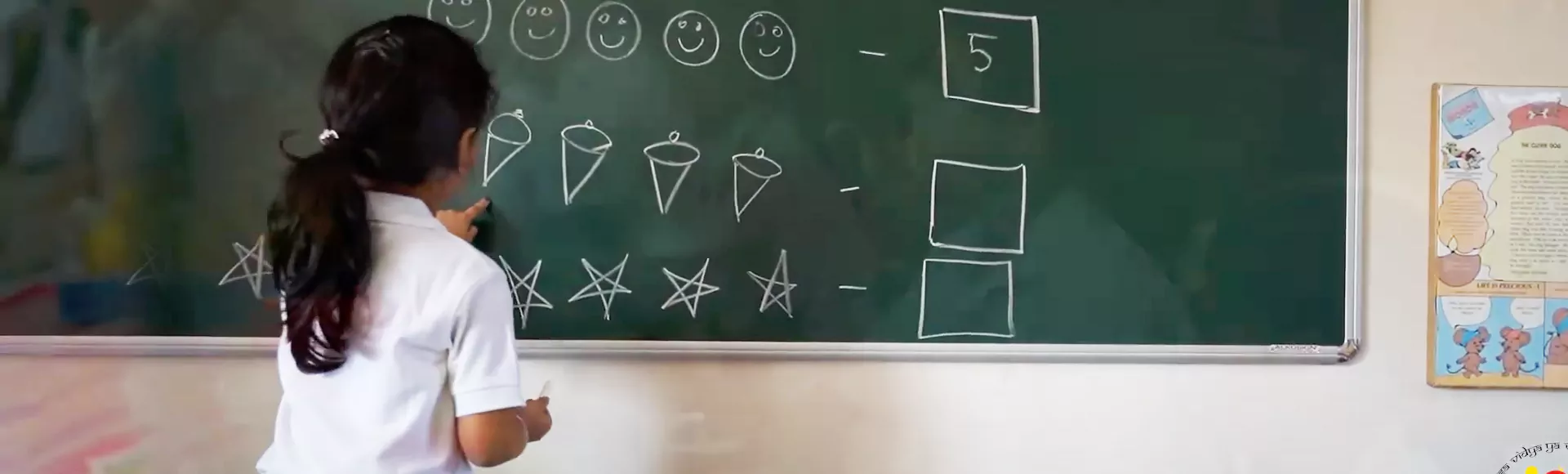
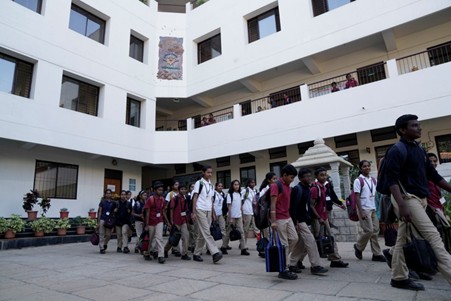
The move from primary to secondary school is one of those milestones that looks simple on paper — your child finishes one phase and starts another. But anyone who has watched a child go through it knows it's more than a change of building or uniform. It's a shift in almost everything: how they learn, who they learn with, what's expected of them, and how they see themselves.
Some children sail through. Others struggle quietly. Most land somewhere in between — excited one day, anxious the next, and occasionally both at once.
What makes the difference isn't luck. It's preparation. Not the kind that involves cramming or last-minute orientation sessions, but the steady, thoughtful work that happens months (sometimes years) before the first day of secondary school. Academic readiness matters, yes.
This guide is for parents who want to understand what that preparation actually looks like — and how schools like Vidyanjali Academy for Learning build it into every stage of a child's journey.
What Is the Transition from Primary to Secondary Education Like?
The transition isn't just one change. It's several things happening at once. New teachers. New subjects. New classmates. A new building, often larger and more complex than anything they've navigated before.
Difference Between Primary and Secondary Schooling
In primary school, children typically have one teacher who knows them well. That teacher sees them struggle with fractions, watches them make friends, notices when they're having a bad day. The relationship is close, consistent, and reassuring.
Secondary school works differently. Students move between classrooms. They have different teachers for different subjects — sometimes six or seven in a single day. Each teacher has their own expectations, their own style, their own way of explaining things.
The depth of learning changes too. Primary education builds foundations. The pace is faster. The workload is heavier. And the responsibility for keeping up shifts — gradually but unmistakably — onto the student.
Aspect | Primary School | Secondary School |
Teaching approach | One primary teacher for most subjects | Multiple subject-specific teachers |
Number of subjects | Core subjects with integrated learning | Broader curriculum with distinct subjects |
Student responsibility | Teacher-guided structure | Greater self-management expected |
Classroom structure | Fixed classroom, familiar setting | Moving between rooms and labs |
Learning depth | Foundational concepts | Application and critical thinking |
Changes in Curriculum, Schedule, and Environment
The curriculum expands significantly. Where primary school might have covered science as a single subject, secondary school splits it into physics, chemistry, and biology. Languages become more demanding. Mathematics moves from arithmetic into algebra and geometry.
Schedules get longer. Free periods appear — which sounds like a gift until you realise they require self-discipline to use well. Extracurricular activities multiply, and students are expected to participate, not just observe.
The environment itself changes. Larger buildings. More students. Less hand-holding. For a child who has spent years in the same familiar classroom, this can feel disorienting. Which is exactly why early familiarity helps.
Some children become quieter. Others act out. Most are simply trying to figure out who they are in this new context. Emotional support during this period isn't optional. It's essential.
Why Is Preparation for Secondary School Important?
Preparation doesn't eliminate challenges. But it does reduce the shock. A child who knows what to expect — academically, socially, emotionally — enters secondary school with a foundation to stand on. They're not starting from zero.
Avoiding Stress and Anxiety
Fear of the unknown is real. Children who have never seen their new school, never met their teachers, never understood what a typical day will look like — they carry that uncertainty with them. It shows up as anxiety, reluctance, sometimes physical symptoms like headaches or stomach aches.
Building Confidence and Adaptability
Confidence doesn't come from being told you're great. It comes from experience — from trying something difficult and discovering you can handle it.
Preparation gives children small wins before the big transition. Learning to pack their own bag. Managing a simple schedule. Completing homework without being reminded. Each of these builds the muscle memory of independence. By the time secondary school arrives, they've already proven to themselves that they can adapt.
Enhancing Academic Readiness
Strong foundations matter. A child who enters secondary school with solid literacy and numeracy skills has room to grow. A child who enters with gaps spends the first months catching up — and that's exhausting.
Academic readiness isn't about being ahead. It's about being secure in the basics: reading comprehension, clear writing, mathematical reasoning, the ability to follow instructions and ask questions when something doesn't make sense.
How Can Parents Support Their Child During This Transition?
Parents can't do the transition for their children. But they can create the conditions that make it easier. Routines. Conversations. Space to struggle. And the quiet confidence that says: I believe you can do this.
Establishing Routines
Start building these routines before secondary school begins. Don't wait until the first week. If your child will need to wake up earlier, start adjusting bedtimes a few weeks in advance. If homework will increase, practice setting aside focused study time now.
Communication and Emotional Support
Listen more than you advise. Children often don't need solutions — they need someone to hear them. When your child expresses worry about secondary school, resist the urge to immediately reassure. Instead, ask questions. What specifically worries you? What would help?
Validate their feelings. "That sounds hard" is sometimes more helpful than "You'll be fine." Children who feel heard are more likely to keep talking — and that ongoing conversation is what allows you to support them through the transition.
Encouraging Independence
Independence is built gradually. Start small. Let your child pack their own school bag. Let them decide when to do homework (within reason). Let them make mistakes — and experience the natural consequences.
This is harder than it sounds. It's tempting to step in, to fix things, to make sure everything goes smoothly. But children who never struggle never learn to cope with struggle. And secondary school will bring struggle.
Supporting Study Habits
Create a quiet study space. It doesn't need to be fancy — a desk, good lighting, minimal distractions. What matters is consistency: this is where studying happens.
Help your child use a planner or checklist. Not to micromanage, but to model organisation. Show them how to break a large assignment into smaller steps. Encourage revision before tests, not just the night before. These habits, once established, carry through secondary school and beyond.
What Academic Skills Should Students Develop Before Secondary School?
Time management is a skill, not a personality trait. It can be taught. Start by helping your child estimate how long tasks will take, then compare that estimate to reality. This builds awareness.
Teach them to prioritise. Not everything is equally urgent. Some assignments can wait; others can't. Learning to distinguish between the two — and to plan accordingly — is one of the most valuable skills a student can develop.
Basic Literacy and Numeracy Mastery
Reading comprehension is foundational. A student who can read fluently but doesn't understand what they've read will struggle across every subject. Practice reading for meaning, not just speed. Ask questions about texts. Discuss vocabulary.
Numeracy matters too. Not just arithmetic — though that's important — but mathematical reasoning. These skills underpin science, economics, and much more.
Study Techniques
Not all studying is equal. Passive reading is less effective than active recall — testing yourself on what you've learned. Spaced revision beats cramming. Mind maps help some students; others prefer linear notes.
Self-Assessment and Goal-Setting
Students who can honestly assess their own strengths and weaknesses learn faster. They know where to focus their effort. They don't waste time on what they've already mastered.
Encourage your child to set small, realistic goals. Not "I'll get better at maths" — that's too vague. But "I'll practice fractions for 20 minutes three times this week" — that's actionable. And when they achieve it, they build confidence.
What Emotional and Social Skills Are Crucial for Secondary School?
Academic skills get you through exams. Emotional and social skills get you through everything else — the friendships, the conflicts, the pressure, the moments when things don't go as planned.
Emotional Intelligence
Emotional intelligence is the ability to understand your own emotions and respond to others' emotions with empathy. It sounds abstract, but it shows up in concrete ways: staying calm during a disagreement, recognising when you're stressed, knowing when to ask for help.
Conflict Resolution and Peer Interaction
Conflicts happen. Friends disagree. Classmates compete. Someone says something hurtful. How students respond to these moments matters more than whether the moments occur.
Teach respectful communication. Teach boundary-setting. Teach the difference between assertiveness and aggression. These skills don't come naturally to everyone — but they can be learned.
Self-Confidence and Resilience
Resilience isn't about never failing. It's about getting back up after you fail. It's about trying again when something doesn't work. It's about believing — even when things are hard — that you can figure it out.
How Can Students Build Independence and Responsibility?
Independence isn't given. It's practiced. Students who take ownership of their learning — who track their own homework, manage their own time, ask for help when they need it — are better prepared for the increased demands of secondary school.
Managing Assignments and Deadlines
Deadlines are non-negotiable in secondary school. Students who haven't learned to manage them struggle — not because they're not smart, but because they haven't developed the systems to stay organised.
Teach your child to use checklists. To break large projects into smaller steps. To work backwards from a deadline and plan accordingly. These are skills that serve them for life.
Using Planners and Study Apps
Planners work. So do digital calendars, homework trackers, and study apps. The specific tool matters less than the habit of using it consistently.
Some prefer paper; others prefer screens. What matters is that they have a way to see what's coming, track what's done, and plan what's next.
What Are the Best Practices to Ensure a Smooth School Transition?
They're the result of intentional preparation — by families, by schools, and by students themselves.
Visiting the New School
Familiarity reduces anxiety. If possible, visit the secondary school before the academic year begins. Walk through the classrooms, the library, the labs, the sports areas. Let your child see where they'll be spending their days.
This simple step transforms the unknown into the known. The building stops being a source of worry and becomes just a place — a place they've already been.
Connecting With Future Classmates
Starting secondary school is easier when you already know someone.
Encourage your child to participate. Even one familiar face on the first day makes a difference.
Make sure your child knows who they can turn to. At home. At school. And remind them that asking for help isn't weakness. It's wisdom.
Why Is Vidyanjali Academy One of the Best Schools for Secondary Education?
Vidyanjali Academy for Learning has been preparing students for over 30 years — since 1992. The school's approach combines academic excellence with character development, transition support, and genuine partnership with parents.
Overview of the School's Philosophy
Vidyanjali's philosophy is clear: "Every child is unique and different, but there is a genius hidden in each one of them." The school focuses on development of body, mind, and spirit — not just academic grades, but creating responsible people for society.
Parent-Student Engagement Model
Vidyanjali involves parents through multiple touchpoints: Parent Orientation, Parent Empowerment Day, Parent Engagement Conference, Open House (FUN-W-FAMILY), VAL Talks, and regular Parent-Teacher Meetings and Workshops.
This isn't token involvement. It's genuine partnership. Parents understand what's happening in the classroom. Teachers understand what's happening at home. And students benefit from that alignment.
To learn more or schedule a visit, contact Vidyanjali Academy for Learning:
Phone: 9008202222
Email: info@vidyanjali.in
Visiting hours: Monday–Friday 8:30 AM–4:00 PM, Saturday 8:30 AM–12:00 PM